

The Smart Evolution: AI Re-Engineers Print Production

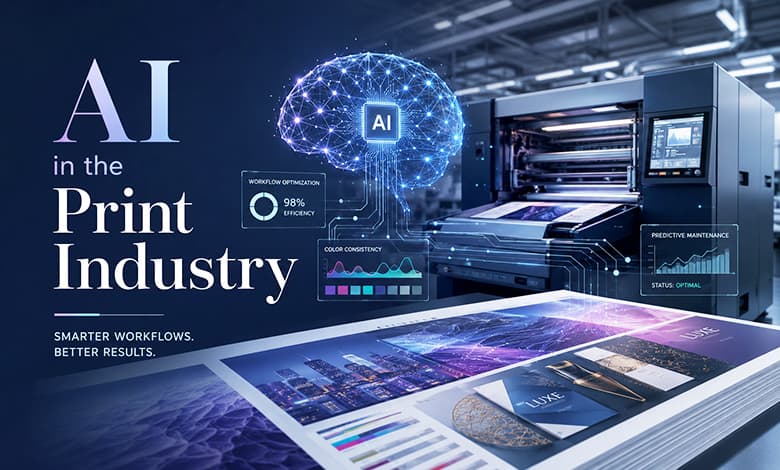
Artificial intelligence (AI) is driving a rapid evolution across the printing sector, moving operations away from traditional mechanics towards highly automated, data-driven print environments. Top industry leaders are heavily embedding intelligent algorithms into consumer and industrial environments to resolve long-standing limitations, remove historical operational friction, and elevate overall system safety. This transformation optimises everything, from individual home desk top printers to enterprise digital printing plants and huge packaging lines. The use of AI offers users significant added value in terms of transparency, user-friendliness, and time savings.
Current Implementations of AI in Print Production
To streamline initial workflows and optimise job routing, print systems utilise intelligent software that continuously keeps track of which individual presses are currently busy and which are completely free. The software routes new incoming jobs directly to available presses while system tools automatically optimise individual document layouts. Furthermore, direct mail and catalogues automatically generate highly customised mailings with varying content based entirely on a customer’s unique profile.
In the realm of natural language production analytics, dedicated platforms like the HEIDELBERG Portal deploy conversational interfaces such as the HEIDELBERG AI Performance Chat. Users query print machinery on-demand using everyday natural language to build intricate analytical reports and customisable dashboards in mere seconds. The AI immediately processes production data and extracts exact metrics like Overall Equipment Effectiveness (OEE), machine performance, shift variations, and deviations, delivering this information in structured formats containing tables, detailed charts, and clear contextual interpretations.
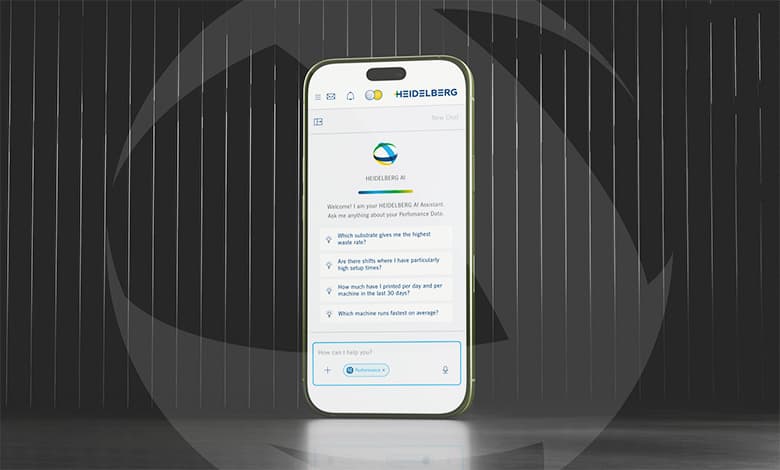
“With the HEIDELBERG AI Performance Chat, we’re making the handling of production data significantly more intuitive. Our customers can ask exactly the questions that concern them in their day-to-day work, and get the answers they need right away,” says Jürgen Grimm, Head of Prinect at HEIDELBERG. “It’s intuitive, saves time, and helps make informed decisions faster.”
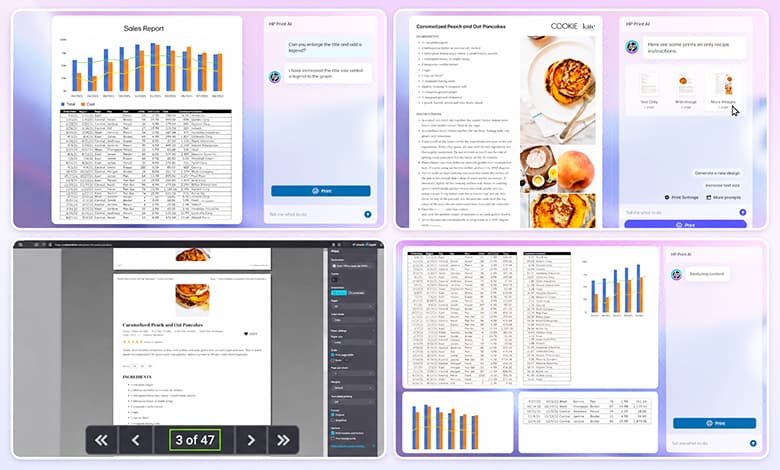
Advanced software experiences have also transformed individual device interaction through tools like HP Print AI, which makes printing frictionless by eliminating common challenges from printer setup to support. Its specialised contextual features—notably Perfect Output—ensures prints look perfect every time. Perfect Output bridges the gaps between what people see on the screen and what they intend to print, reformatting and reorganising content to fit perfectly on the page the first time. It can detect unwanted content like ads and web text, printing only the desired text and images, saving time, paper, and ink.
HP Print AI features also enhance the printing experience at home and at work by unlocking new possibilities for creativity, productivity, and collaboration. “We are transforming the printing experience with HP Print AI, making it easier and more intuitive,” says Tuan Tran, President of Technology & Innovation Organization at HP. “Introducing AI solutions across our portfolio will simplify printing, ignite creativity, and accelerate collaboration—all while ensuring customer data is protected and kept private.”
Additionally, software services like HP Scan AI Enhanced digitise operational workflows, while collaboration spaces like HP Build Workspace form tailored print environments specifically for architecture, design, and construction sectors.
Xerox is another tech company pivoting towards AI integration. Xerox coordinates an expansive digital workflow infrastructure built on Intelligent Document Processing (IDP) and their signature Global Capture platforms. These advancements are anchored by hardware innovations like the Xerox AltaLink 8200 Series, which represents the industry’s first AI-assisted multifunction print line. Furthermore, by expanding its technical reach through integrated Lexmark capabilities, Xerox has scaled up its predictive service analytics, remote fleet management, and automated security monitoring across distributed corporate workspaces.
Meanwhile, Konica Minolta is focused on moving from superficial tech hype to delivering clear operational value. This is achieved by utilising advanced algorithms to monitor human labour variables, which ultimately streamlines increasingly complex operations and verifies print output system performance in real-time. By applying intelligent analytics to automated pre-press routines and internal system monitoring, the company ensures that digital commercial printing remains highly consistent and increasingly safe for operators.
Quantifiable Advantages of AI Adoption
The integration of smart technology delivers frictionless setup and management as automated guidance walks customers entirely through initial device installation starting from the moment they turn on a machine. Smart applications handle technical troubleshooting, device calibration, and immediate customer support, which allows intelligent algorithms to remove common printing errors and eliminate mistakes.
Resource optimisation and efficiency are also fundamentally improved because software systems minimise material print waste during full-scale manufacturing cycles. Because of this minimisation, plants accomplish environmental sustainability objectives far more successfully, and data-driven decision-making is simplified to sustainably increase efficiency in print production.
Finally, the technology yields substantial labour savings and worker safety advantages since manufacturing worker lives are made significantly easier by stabilising the overall manufacturing environment. Factories experience reduced corporate labour expenses, and the resulting automation creates a more dependable and safer environment for employment.
Future Outlook of Print and Packaging
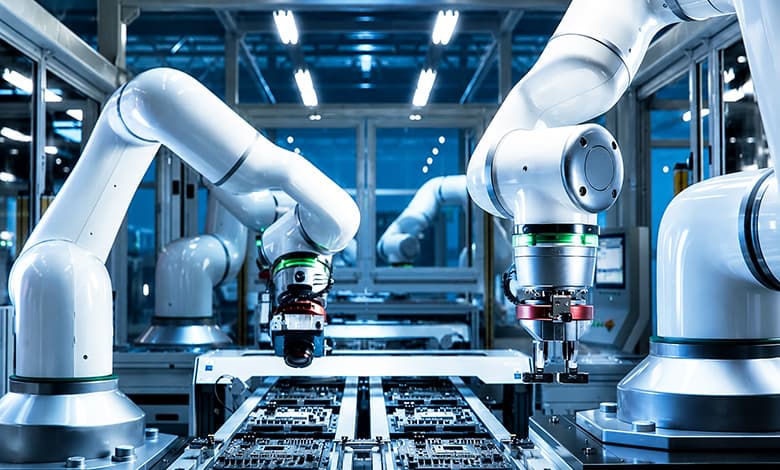
The future of the printing landscape relies on advanced assistance systems acting as the foundational step towards automated printing. Modern digital presses are becoming self-monitoring units equipped with integrated sensor arrays to check internal performance. This provides print service providers (PSPs) with advanced remote control and uninterrupted round-the-clock operations. Predictive maintenance tools will utilise big data analytics to examine uploaded sensor data, allowing experts to implement preventive countermeasures and schedule repairs off-shift well before severe equipment failures occur.
The integration of AI is no longer an optional upgrade but a fundamental requirement for the survival and scaling of modern printing companies. By transitioning away from time-consuming manual diagnostics and moving directly towards automated, self-correcting print systems, the industry is effectively insulating itself against acute skilled labour shortages and rising time pressures. As print architectures become deeply integrated with cloud-based analytics, businesses that embrace these intelligent platforms will secure an unmatched standard of manufacturing safety, resource optimisation, and operational longevity.



One Comment