

Cost Squeeze Deepens Crisis for Egypt’s Publishers

Egypt’s publishing sector is undergoing a major structural shift as skyrocketing paper and printing costs, currency fluctuations, and high energy prices transform the industry’s traditional economics. Industry experts report that the current crisis extends far beyond rising book prices, fundamentally reshaping the entire supply chain from printing presses and publishing houses to distributors, libraries, and end consumers.
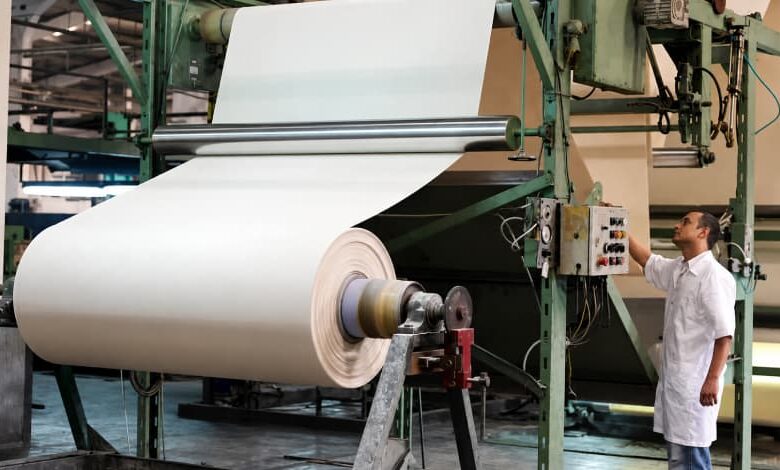
The steep rise in imported production supplies has turned new book publishing into a high-risk venture. According to data from the Paper and Cardboard Division belonging to the Chamber of Chemical Industries, which functions under the Federation of Egyptian Industries (FEI), Egypt consumes between 4,00,000 and 4,50,000 tonnes of printing and writing paper annually. The domestic sector is driven primarily by Misr Edfu Paper Company and Quena Paper Industry Company (QPIC), Egypt’s two largest paper producers. They play a vital strategic role in mitigating the country’s paper crisis, producing between 1,20,000 and 1,50,000 tonnes per year using sugarcane bagasse. This leaves a structural deficit, with foreign imports accounting for 65% to 70% of local market needs, tightly linking book pricing to global exchange rates and paper market fluctuations.
The financial strain has forced many small publishing houses to downscale operations or exit the market entirely. Conversely, larger entities are expanding their market share, leveraging their capital strength to purchase paper in bulk and operate independent distribution networks.
To survive, publishers are increasingly reliant on major industry events for liquidity. The Cairo International Book Fair now serves as the primary financial lifeline for the sector, with medium and small houses securing between 50% and 70% of their total annual sales during the exhibition period.
In response to these headwinds, the industry is pivoting towards modern operational models. Industry leaders are calling for structural shifts, including a transition towards limited paper print runs supplemented by integrated digital and audio formats. To ensure long-term sustainability, stakeholders are also urging government intervention through reduced taxes, lowered customs duties on printing supplies, increased state purchases for public libraries, and aggressive anti-piracy enforcement.