
The Impact of Generative AI on the Packaging Industry

The global packaging industry, valued at approximately USD 1.2 trillion in 2025, is entering a transformative phase driven by the rapid adoption of Generative Artificial Intelligence (GenAI). According to recent research by Smithers, GenAI is poised to reshape packaging design, production, supply chains, and sustainability strategies over the next decade.
From Automation to Intelligence
Unlike earlier forms of automation and data analytics, Generative AI represents a fundamental shift. It is capable of processing vast volumes of unstructured data—text, images, and video—and generating new content based on learned patterns. This enables packaging companies to move beyond efficiency gains and toward intelligent, adaptive decision-making across the entire value chain.
Initially popularised by applications such as ChatGPT, GenAI is now being explored for advanced industrial use cases, including product design, workflow optimisation, market analysis, and consumer engagement. While challenges remain—particularly around data privacy, regulation, and the energy intensity of AI training—the technology’s potential to unlock competitive advantage is clear.
Accelerating Speed to Market
One of the most immediate impacts of GenAI is on speed to market. Packaging is increasingly shaped by demand for personalisation, shorter product runs, regional branding, and rapid response to social media trends. These pressures place significant strain on designers, brand owners, and converters.
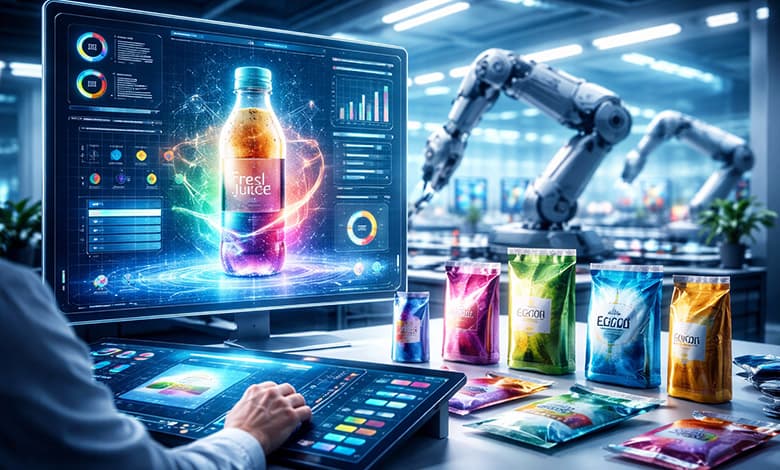
GenAI can dramatically reduce development cycles by supporting dynamic design generation, automated artwork creation, and rapid versioning of packaging graphics. Although current models still struggle with some technical packaging terminology, ongoing improvements are expected to make AI a powerful co-creator alongside human designer. Rather than replacing creativity, GenAI expands it—providing designers with richer consumer insights, real-time performance data, and faster iteration capabilities.
By 2030, Smithers predicts that GenAI will be deeply embedded not only in creative processes, but also in administration, production planning, logistics, and distribution within the packaging ecosystem.
Transforming Packaging Development
Beyond design, GenAI is set to redefine packaging development and prototyping. Virtual prototyping powered by AI allows brands to test radical new concepts digitally, reducing reliance on costly physical trials. AI-driven agents can continuously refine designs based on consumer feedback, market trends, and performance data.
In parallel, the integration of GenAI with digital printing technologies enables on-demand, customised packaging—particularly relevant for e-commerce and direct-to-consumer brands. Personalised graphics, variable data printing, and tailored packaging formats can be generated efficiently at scale, giving brands greater agility and differentiation.
Smarter, More Resilient Supply Chains
GenAI also plays a critical role in enhancing supply chain efficiency. Smarter stock management systems, predictive forecasting, and AI-driven monitoring help reduce waste, improve responsiveness, and mitigate disruptions. This is especially important as the packaging market sees a growing number of SKUs and shorter production runs.
E-commerce is a key driver of this transformation. AI-enabled “right-sizing” of packaging reduces material use, transportation costs, and environmental impact. Advanced robotic and cobotic systems, supported by AI, allow packaging lines to handle greater variability without sacrificing speed or efficiency. Real-time data—from warehouse movement to consumer interaction—feeds back into production, enabling continuous optimisation.
Sustainability and the Circular Economy
Sustainability is another area where GenAI offers significant promise. By optimising material selection, improving process efficiency, and supporting end-of-life management, AI can help packaging companies move closer to a fully circular economy. Self-learning systems can adapt production to minimise waste, enhance recyclability, and improve lifecycle performance, aligning economic and environmental objectives.
Looking Ahead
The future outlook for GenAI in packaging is one of rapid integration and disruption. Barriers to creativity will continue to fall as AI tools become more accessible and sophisticated. Packaging formats will become more versatile, personalised, and data-driven, while brands will be able to launch products faster and with greater confidence in market fit.
At the same time, collaboration will become increasingly important. Strategic partnerships and alliances—between packaging companies, technology providers, and data specialists—are expected to be as disruptive as the technology itself. Those who invest early in GenAI capabilities will be best positioned to lead the next phase of innovation in packaging.