
Labels & Packaging 2026
How the Middle East Is Entering a New Phase of Digital Maturity

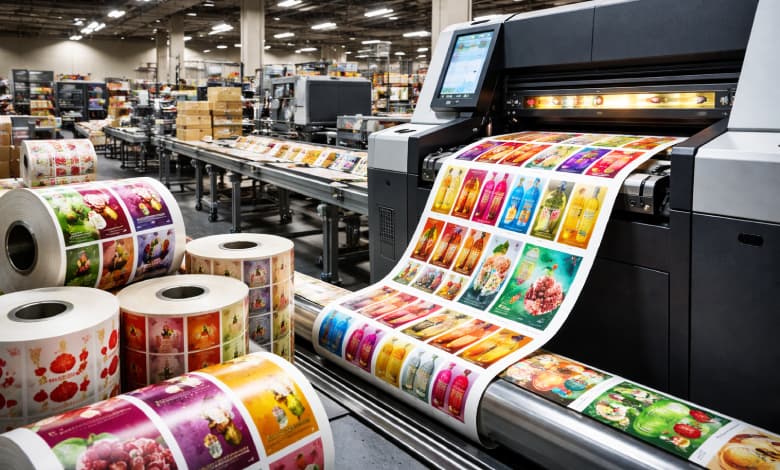
The Middle East’s labels and packaging sector is approaching 2026 not with hesitation — but with recalibration.
Over the past decade, converters across the UAE, Saudi Arabia, Turkey, and Egypt have invested aggressively in digital label presses, hybrid flexo platforms, embellishment technologies, and finishing automation. Regional exhibitions such as Gulf Print & Pack and FESPA Middle East have consistently reflected this appetite for modernization, while global showcases like drupa 2024 reinforced the rapid evolution of digital packaging platforms.
Yet as the industry moves into 2026, the conversation is changing.
According to Keypoint Intelligence’s global outlook, What to Watch in Labels & Packaging 2026 , the packaging market worldwide is entering a more disciplined phase of digital adoption — one shaped less by experimentation and more by operational alignment. For Middle Eastern converters, this transition is especially relevant. The region is not slowing down. It is maturing.
Digital Printing: From Specialty Capability to Production Strategy
Digital printing in the Middle East has long been associated with short runs, luxury cosmetics, private-label launches, and fast-turn promotional campaigns. In many GCC markets, label converters were early adopters of toner and inkjet systems compared to global averages.
However, 2026 is marking a structural shift. Keypoint Intelligence notes that digital growth globally is now being driven by mainline production requirements rather than specialty applications . That same shift is increasingly visible across the region.
Converters are asking more grounded questions:
- Can digital support higher throughput?
- Does it integrate with flexo production planning?
- Will it reduce waste and plate dependency?
- Can uptime and service reliability be guaranteed locally?
Rather than replacing analog platforms, digital is increasingly being positioned as a strategic complement — bridging mid-length runs, improving scheduling flexibility, and responding to SKU proliferation. In corrugated packaging, where digital adoption has historically been cautious due to cost-per-sheet considerations, rising regional e-commerce growth — highlighted in recent GCC market studies — is creating renewed interest in short-run, localized, and campaign-driven production models.
Brand Influence and Regional Industrial Policy
Brand participation is becoming one of the most decisive factors shaping digital adoption. Keypoint’s report emphasizes that global brands are increasingly influencing where digital investments accelerate . In the Middle East, this trend is reinforced by structural economic initiatives.
Saudi Arabia’s Vision 2030 industrial programs and the National Industrial Development and Logistics Program (NIDLP) are actively encouraging manufacturing localization and supply-chain efficiency. As production shifts closer to regional markets, packaging must respond with greater agility.
Meanwhile, retail expansion and private-label growth in the UAE and Saudi Arabia are increasing SKU variation and shortening product life cycles. Brand owners are demanding:
- Faster product launches
- Regionalized packaging versions
- Smaller production batches
- Greater supply-chain responsiveness
Corrugated and label converters that can offer flexible digital capabilities are increasingly aligning with these expectations. Where brand pressure grows, digital adoption follows.
Software Connectivity: The Quiet Competitive Divider
While hardware modernization has been visible across the Middle East, software connectivity remains uneven.
Many converters operate with:
- Standalone MIS platforms
- Disconnected prepress systems
- Manual job ticket transfers
- Limited production analytics
Keypoint identifies software connectivity as both a critical enabler and a constraint of digital scale. As digital volumes expand, fragmented systems create friction:
- Duplicate data entry
- Slower turnaround times
- Increased risk of production errors
- Limited cross-site visibility
In 2026, integration may matter more than installation. Converters investing in ERP integration, automated job routing, centralized color management, and production dashboards are likely to see stronger digital ROI. In markets where skilled labor availability can fluctuate, automation through workflow integration is becoming a structural advantage.
Investment Discipline in a Volatile Environment
Despite strong regional growth, converters are navigating economic pressures:
- Currency volatility in certain markets
- Import cost fluctuations
- Competitive pricing dynamics
- Higher capital costs
Globally, Keypoint notes that investment decisions are becoming necessity-driven rather than exploratory . The Middle East reflects the same trend. Capital expenditure in 2026 is likely to prioritize:
- Productivity improvements
- Labor stabilization
- Faster turnaround capability
- Waste reduction
- Predictable output
Exhibition floors may still showcase breakthrough technologies, but buying decisions increasingly demand clear ROI justification. Converters are asking for measurable metrics, strong regional service presence, and long-term ecosystem stability — not just headline specifications.
OEM Ecosystems Over Individual Machines
The Middle East remains one of the most OEM-diverse packaging markets globally, with strong European, Japanese, American, and growing Asian supplier presence. However, competitive differentiation is shifting.
Keypoint’s analysis suggests that OEM advantage is increasingly defined by portfolio cohesion — how hardware, software, consumables, finishing, and service work together . For Middle Eastern converters, practical considerations often outweigh incremental performance gains:
- Is local technical support strong?
- Are spare parts available quickly?
- Is workflow integration seamless?
- Can multiple production sites standardize platforms?
As regional groups expand operations across GCC markets, stability and interoperability are becoming strategic priorities.
AI: Rising Expectations from the Brand Side
Artificial intelligence is advancing rapidly across consumer goods and retail sectors. Brand organizations are already deploying AI tools for demand forecasting, marketing analytics, campaign planning, and SKU rationalization. Keypoint predicts that AI adoption will progress faster at the brand level than among converters. In the Middle East, this could create a growing expectation gap.
Brands may increasingly expect:
- Faster design approval cycles
- Real-time production updates
- Increased versioning flexibility
- Tighter supply-chain feedback loops
Converters, however, may need to first strengthen digital foundations — particularly connectivity and data infrastructure — before AI-driven production optimization becomes scalable. The pressure may arrive before the full readiness.
Sustainability Moves from Messaging to Measurement
Sustainability continues to influence packaging strategies across the region, supported by UAE ESG frameworks and evolving regulatory expectations tied to export markets.
Digital printing contributes through:
- Reduced overproduction
- Lower inventory waste
- On-demand manufacturing
- Shorter runs aligned with SKU variation
However, sustainability in 2026 is increasingly data-driven. Reporting, traceability, and measurable environmental impact are becoming central requirements. Without integrated systems, sustainability claims lack operational proof.
The Defining Theme: Alignment
If one word defines 2026 for Middle Eastern packaging, it is alignment.
Alignment between:
- Digital capability and production reality
- Brand expectations and converter readiness
- Hardware investment and software integration
- Capital deployment and measurable return
The industry is not retreating from digital. It is embedding it more deeply into operational strategy. As the Keypoint Intelligence outlook suggests, progress in 2026 will be measured not by technological novelty but by ecosystem alignment .
For Middle Eastern converters, the next competitive edge will not come from buying the newest press alone — but from integrating technology, workflow, service, and strategy into a cohesive production environment.
Digital printing is no longer emerging.
AI is no longer distant.
Connectivity is no longer optional.
2026 belongs to those who align.



One Comment