
Polysmart Launches Africa’s Largest Food-Grade rPET Plant

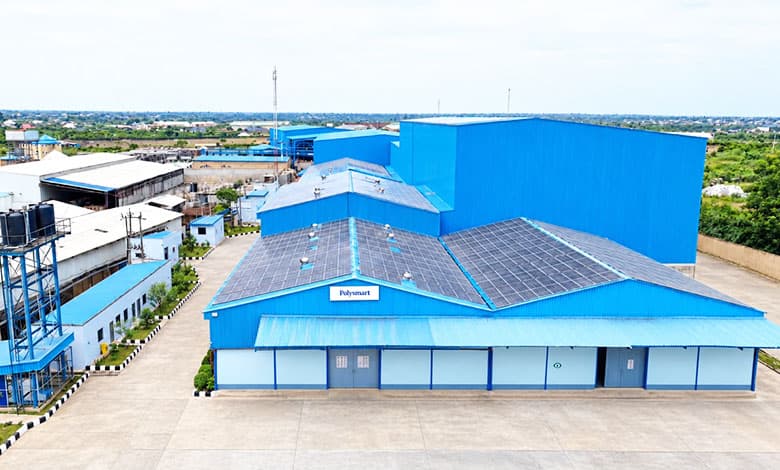
Polysmart Packaging Limited, a wholly indigenous Nigerian company, has formally commissioned Phase 1 of its expanded food-grade recycled polyethylene terephthalate (rPET) plant in Mowe, Ogun State. The facility marks a major investment in Nigeria’s plastic recycling industry and circular economy.
The $60 million facility—described as the largest of its kind in Africa—is engineered to process post-consumer plastic bottles into high-quality recycled material suitable for food-contact applications. At full capacity, the plant will produce 60,000 tonnes of food-grade rPET annually, alongside 20,000 tonnes of other recycled plastics.
The commissioning signifies a crucial milestone in efforts to expand bottle-to-bottle recycling in Nigeria, recover discarded plastics, and supply local manufacturers with recycled raw materials that can reduce dependence on imported virgin plastic resin.
The commissioning ceremony, themed ‘Closing the Loop: Food-Grade rPET and Nigeria’s Circular Economy,’ drew a high-profile gathering of government officials, traditional rulers, industry leaders, financial institutions, investors, development partners, and members of the media.
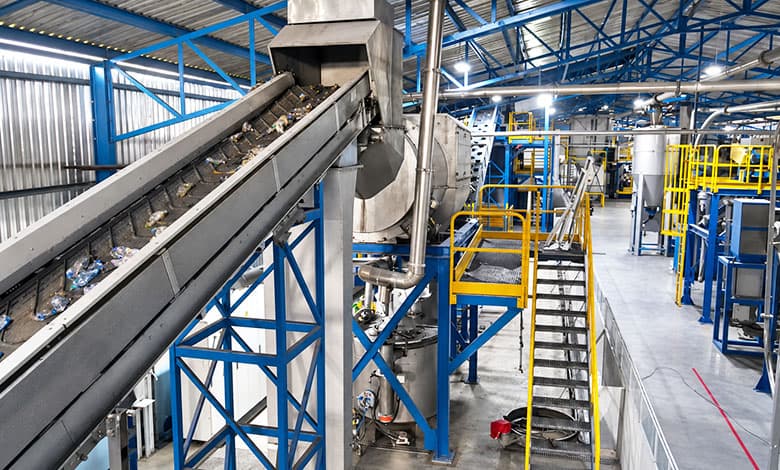
The facility will process up to 100,000 tonnes of post-consumer PET annually, equivalent to approximately 6.5 billion bottles, helping divert substantial volumes of plastic waste from streets, landfills, drainage channels, and waterways.
Speaking ahead of the commissioning, Polysmart Group Managing Director and CEO Wasiu Balogun stated that the investment demonstrated the potential of Nigerian enterprise to develop world-class recycling infrastructure.
“When we started this journey in 2013, many people told us that world-class, food-grade recycling could not be built in Nigeria. Today, with deep gratitude, we can say that it has been built here by Nigerians, for Nigeria and for Africa,” says Balogun.
He credited the achievement to the collective efforts of plastic collectors, employees, industry partners, financiers, and communities that have supported the company’s growth.
“We are not only recycling plastic; we are restoring dignity to our environment and creating opportunity for our people,” adds Balogun.
The expanded facility is expected to generate approximately 1,000 direct jobs and more than 50,000 indirect jobs across the recycling value chain, including plastic collection, aggregation, transportation, and processing.
The company currently operates 25 aggregation centres across eight states and plans to establish an additional 250 centres across all 36 states within two years. The expansion is intended to strengthen the supply of post-consumer PET bottles to the plant while creating more opportunities for people involved in waste collection and recovery.
The investment is also expected to support import substitution. Nigeria consumes an estimated 600,000 tonnes of virgin PET annually, creating significant scope for locally produced recycled material to replace a portion of imported resin. Projections indicate that the facility could save approximately $72 million annually in foreign exchange through reduced virgin-resin imports.
The plant incorporates processing and sorting systems supplied by European technology providers EREMA, Sorema, and TOMRA. The integrated food-grade recycling processes are designed to meet applicable food-contact standards associated with the U.S. Food and Drug Administration (FDA) and the European Food Safety Authority (EFSA).
The investment also equips manufacturers to navigate Nigeria’s evolving plastic-waste regulatory framework and Extended Producer Responsibility (EPR) requirements. The availability of locally produced food-grade rPET will help manufacturers increase recycled content in packaging and strengthen domestic recycling capacity.
The investment comes amid growing concern over plastic waste and its contribution to blocked drainage channels, flooding, pollution of rivers and other waterways, and the degradation of the environment. Returning used plastic bottles to the manufacturing cycle via bottle-to-bottle recycling offers a route to recovering material value that would otherwise be lost through disposal.
However, the success of such a system also depends on effective waste collection, household and business participation, reliable aggregation networks, and collaboration across the packaging value chain.
Polysmart’s expansion is expected to strengthen these connections by increasing demand for recovered PET bottles and extending the network through which waste collectors and other participants supply recyclable materials.