
Secret Print Run that Sparked the Algerian Revolution

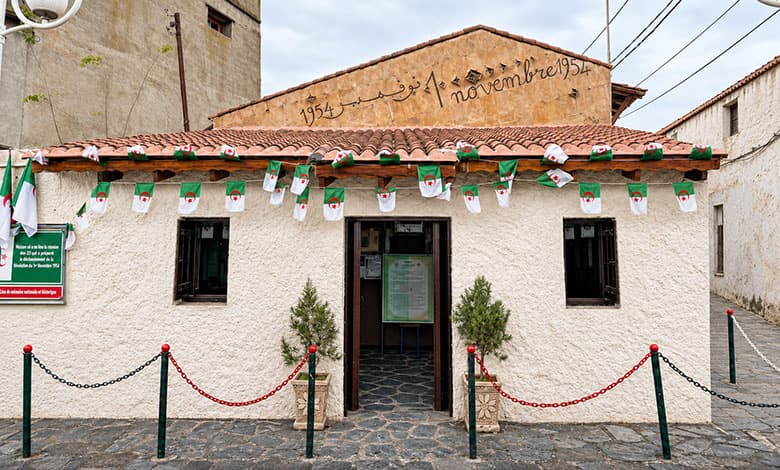
The Algerian village of Ighil Imoula, belonging to the commune of Tizi N’Tieta, holds a legendary status in the nation’s history. It was here that the historic Declaration of 1 November 1954—the foundational manifesto of the Algerian War of Independence—was clandestinely printed and prepared for nationwide distribution.
According to historical accounts, the village was strategically selected for this highly sensitive operation due to its dense network of loyal nationalists and excellent emergency escape routes. Crucially for the publishing trade, it was also one of the rare rural settlements at the time having a stable electricity connection, an absolute necessity for operating production machinery.
The logistics of the operation required absolute secrecy. Historical records show that revolutionary leader Krim Belkacem, who commanded the Kabylia region, entrusted the final version of the revolutionary declaration—prepared by the historic ‘Committee of Six’—to his lieutenant, Ali Zamoum, an Ighil Imoula native. To safeguard the mission, journalist and partisan Mohamed Aïchaoui—who originally drafted the independence proclamation—was brought to the village blindfolded, where he was tasked with typesetting and typing the two-page document. Upon reading the text, Aïchaoui instantly recognised that he was typesetting a formal declaration of war.
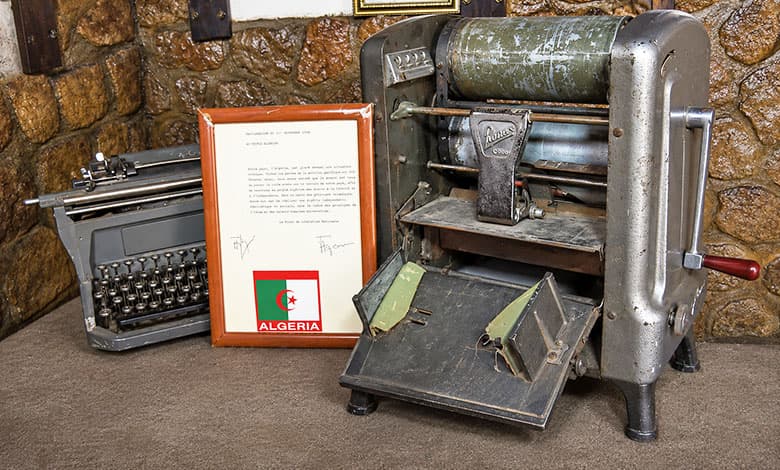
Faced with the technical challenges of industrial noise and security, the operation was relocated to the home of Idir Rabah to access the power grid. To mask the distinctive mechanical clatter of the Roneo duplicating machine, operatives positioned in a shop below the printing room devised unique acoustic cover. They staged a lively public raffle, encouraging local villagers to shout and celebrate each winning number throughout the night. This auditory distraction effectively drowned out the sound of the equipment and diverted the attention of the nearby French sentries.
Once production was completed, the distribution phase began. A courier was ordered by Zamoum to smuggle the freshly printed manifestos and confidential correspondence to Algiers inside a single suitcase. This underground logistics network successfully disseminated the text across the country, transforming a clandestine print run into the driving voice of a national sovereignty movement.
The story of Ighil Imoula demonstrates how a single, secretly operated duplicating machine, combined with ingenuity and industrial problem-solving, managed to outmaneuver a heavily guarded regime—proving that even in the pre-digital era, the power of the printed word was the ultimate tool for mass mobilisation and historic change.
Source: Algérie Presse Service (APS)- aps.dz