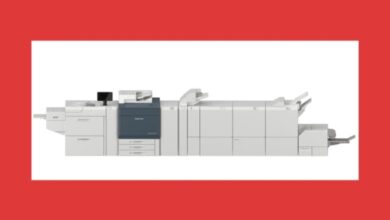



Charting the Next Era of Art Reproduction by Heidi Thompson reveals five key trends driving growth and engagement in the fine arts sector
ACE Public Relations announced the release of Charting the Next Era of Art Reproduction, a new market report by industry specialist Heidi Thompson. The report examines how digital preservation and inkjet print technologies are helping art owners and custodians protect their collections and unlock new avenues for engagement and revenue.
Charting the Next Era of Art Reproduction highlights that today’s technologies can produce one-to-one copies of originals, but the majority of studios and institutions still rely on outdated techniques and equipment, which limits their accuracy and quality. The report also offers a comprehensive look at the opportunities for high-quality reproductions, particularly in the wake of the 2024 contraction of the global art market.
“Technology has advanced to the point that even artists cannot tell the difference between their work and an inkjet-produced reproduction,” says Thompson, who is the founder and head of ACE Public Relations, a PR agency she established in 1999. “While nothing can replace the original with its presence and materiality, one-to-one reproductions now serve as practical safeguards as well as essential tools for reaching broader audiences.”
Key Findings
The report identifies five trends shaping the next phase of one-to-one reproductions in the fine arts sector:
Preserving Condition: One-to-one reproductions are becoming a critical tool for long-term preservation, enabling institutions to track subtle changes in an artwork’s condition as it ages or moves between locations.
Democratising Access: High-quality printed reproductions are bringing important works into a broader range of educational and community settings, giving more people the chance to experience art up close.
Monetising the Archive: Institutions and creators are increasingly leveraging reproduction and licensing strategies to unlock new revenue channels, turning dormant collections into active economic assets.
Matching Originals: Advances in scanning and printing technologies are making one-to-one reproductions faster and more economical to produce, while continuing to enhance their ability to mirror the visual and textural qualities of original works.
Modernising Practises: While many studios and institutions have relied on outdated imaging and printing systems, modernisation can unlock higher-quality, more efficient operations that better serve their constituents.
Charting the Next Era of Art Reproduction notes that the art sector is still formative, with technology advancing faster than the infrastructure supporting it, which represents a major area of investment for organisations seeking to modernise their operations.
“Fine art reproduction offers a compelling opportunity for communities to engage with works in new ways. For individuals with visual impairments, for example, reproductions enable tactile exploration.
High-quality reproductions also allow institutions and educators to bring rarely exhibited pieces into classrooms and public spaces, broadening access and cultural participation,” notes Thompson. “It’s an exciting time for fine art reproduction, especially for museums, which can leverage the technologies to protect and strengthen their business.”