The Baghdad converter discusses its NOVACUT 106 ER investment, growing demand for food packaging, and plans to offer a stronger local alternative to imports
Advanced Art is investing in printing and converting technology to expand its role in Iraq’s packaging market. Based in Baghdad, the company produces folding cartons, corrugated and fluted food packaging, and other paper products, combining decorative finishes with an emphasis on structural strength and converting accuracy.
Its development also forms part of a wider manufacturing renewal. According to the company’s website, a strategic partnership with Advanced Art supported the rehabilitation of Al-Farabi Printing Factory in 2024, including upgraded infrastructure and production equipment. The factory operates within Iraq’s General Company for Food Products, under the Ministry of Industry and Minerals.
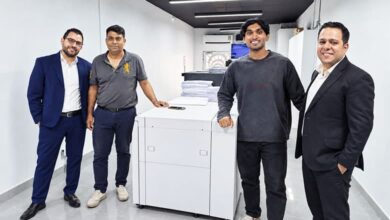
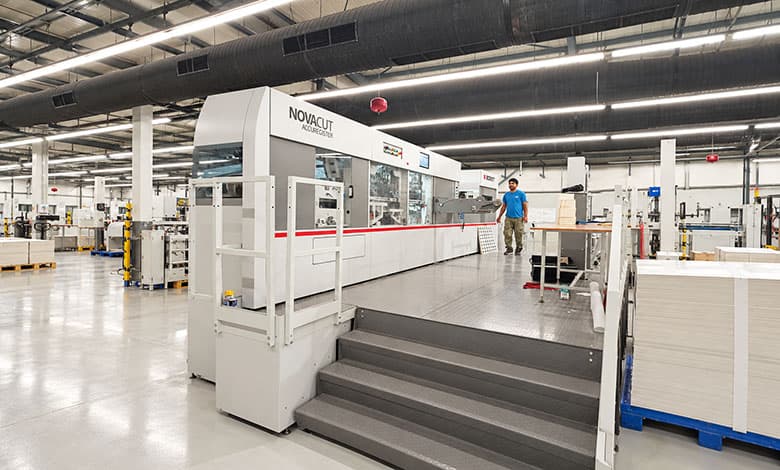
The company’s latest investment is a BOBST NOVACUT 106 ER equipped with ACCUREGISTER. The die-cutter combines cutting, stripping and inline blank separation, bringing several converting stages into one workflow. For Advanced Art, the investment supports its focus on food packaging while providing a platform for more demanding carton applications.
Excerpts from the Interview
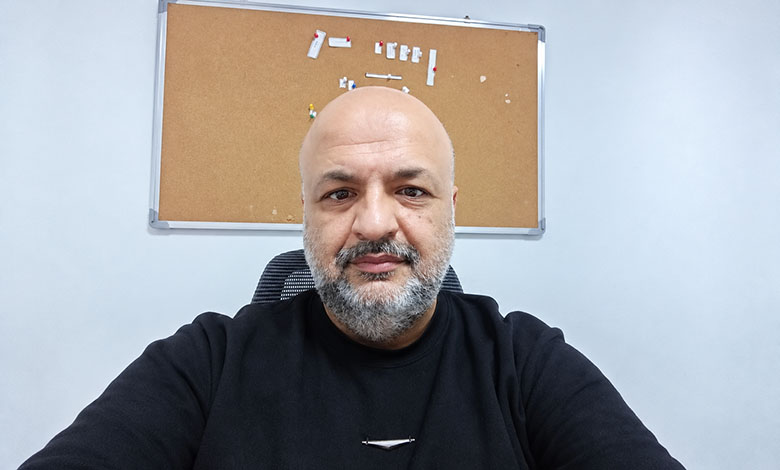
ME Printer caught up with Firas Basil Abu-Zir, Quality Assurance Manager at Advanced Art, to explore how their recent investment optimises production strategy. Abu-Zir discusses developing market trends and explains why Iraqi manufacturers are poised to capture more business from foreign imports.
How has Advanced Art developed, and what defines the business today?
We have grown from a local printing operation into a packaging manufacturer with a strong focus on technology. Our investment in European equipment has allowed us to develop our printing, surface finishing, and converting capabilities together.
Our aim is to provide Iraqi customers with locally produced packaging that combines strong visual presentation with reliable construction and consistent quality.
Which are the sectors you mainly focus on?
Food packaging is our main priority, particularly corrugated and fluted boxes for food producers, takeaway businesses, and retail applications. These products need both structural strength and an attractive printed finish.
We also produce packaging for molasses products, premium tissue boxes, and other consumer goods. Our wider capabilities include pharmaceutical and detergent packaging, flexographic label printing, and value-added finishes such as UV effects and hot foil stamping.
What prompted the investment in the BOBST NOVACUT 106 ER?
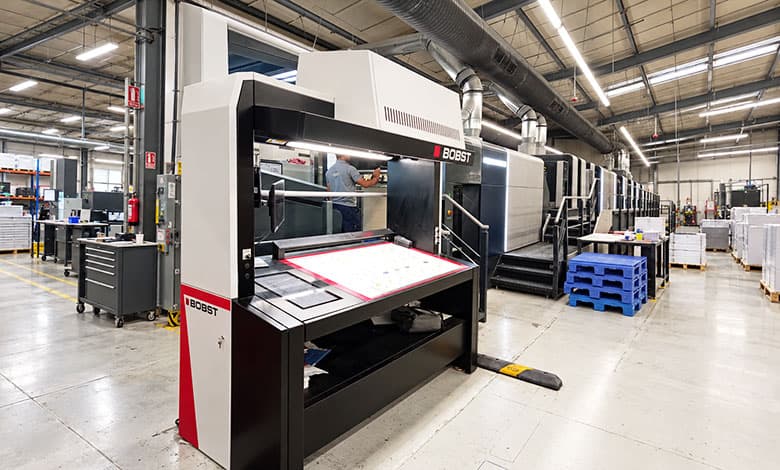
The investment reflects our need for accurate die-cutting and more automated converting. As packaging designs become more demanding, the relationship between the printed image, cut, and crease positions becomes increasingly important.
We selected the NOVACUT 106 ER with ACCUREGISTER and the Automated Pallet Transfer (APT) continuous automated feeding system to strengthen registration accuracy and combine die-cutting with inline blanking. This supports consistent production across our food packaging, molasses cartons, and tissue packaging, while reducing the manual work associated with separating finished blanks.
BOBST lists the NOVACUT 106 ER is a high-speed die-cutter that combines in-line stripping and blank separation at speeds up to 8,000 sheets per hour.
What roles do ACCUREGISTER and APT play in production?
ACCUREGISTER supports precise alignment between the printed sheet and the die-cutting operation. This is particularly important where the design requires accurate positioning of graphics, folds, and cut edges.
APT separates the individual carton blanks during the converting process. It reduces the need for manual separation after die-cutting and helps us move work more efficiently through post-press. Together, these capabilities support our focus on repeatability and quality.
How does the new die-cutter complement your existing equipment?
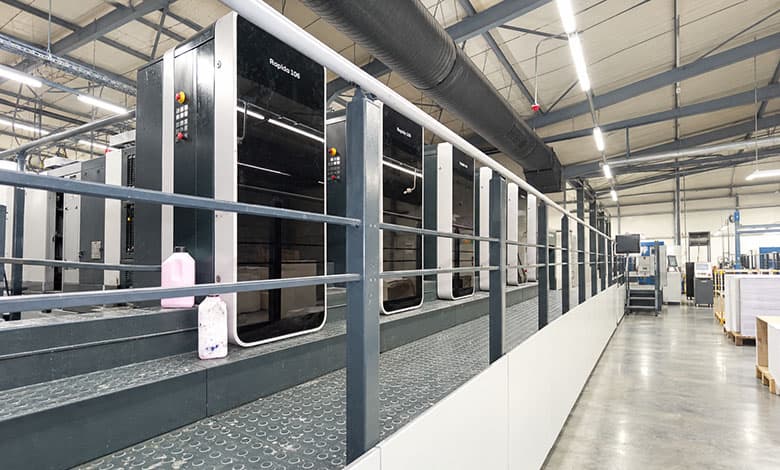
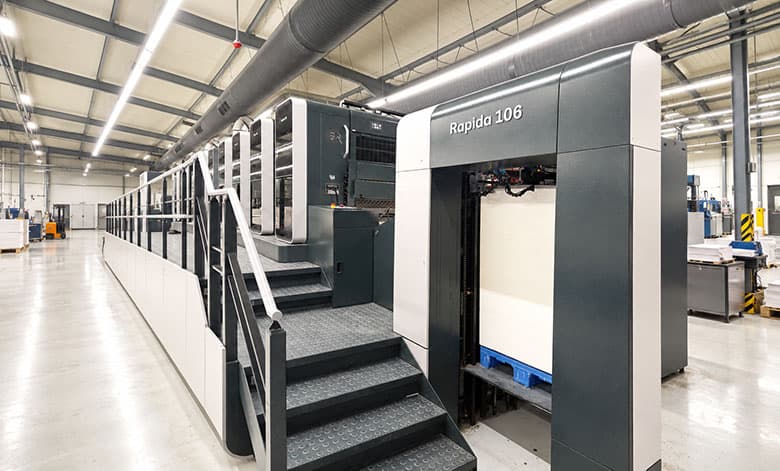
Our Koenig & Bauer Rapida 106 double-coater press is central to our printing capability. We use UV inks and varnishes, including drip-off effects, to create contrasting matt and gloss surfaces for premium packaging.
The BOBST investment strengthens the converting stage that follows printing and finishing. Our wider production capabilities include cutting, folding and gluing, litho-lamination, film lamination, and corrugated carton manufacturing. The objective is to carry the quality achieved in print through to the finished package.
Where do you see the strongest demand come from?
We see particularly strong demand for corrugated and fluted food packaging. Local food manufacturing, takeaway, and delivery businesses need boxes that protect the product while presenting the brand effectively.
Molasses packaging is another important market for us, with demand for distinctive finishes and consistent box dimensions. Premium tissue packaging is also a growing product line.
What are the main challenges, and how are you addressing them?
One challenge is competing with low-cost imported packaging while demonstrating the value of stronger construction and better finishing. Another is achieving the required surface appearance on packaging that uses absorbent materials. We also need to meet the dimensional tolerances demanded by customers’ packaging operations.
We are addressing these issues through coating and finishing technology, more automated converting, and quality control across prepress, printing, and conversion. The double-coater press supports the surface effects we want to achieve, while the NOVACUT strengthens the accuracy of the finished blanks.
How would you describe the direction of Iraq’s printing and packaging industry?
In our experience, the market is moving towards modernisation and greater reliance on local production. Food and consumer goods companies are showing more interest in packaging that combines an attractive finish with dependable structural performance.
We see opportunities for Iraqi converters that invest in suitable equipment and maintain consistent quality. Our goal is to offer customers a competitive local alternative to imported packaging.

Are you focused on the domestic market, or are exports part of your plans?
Our current focus is on serving Iraqi food producers, molasses manufacturers, and consumer goods companies. Replacing imported packaging with locally manufactured products remains an important part of our strategy.
We are also preparing to pursue opportunities in neighbouring regional markets. Our investment in printing and converting is intended to support that ambition, although exports remain a development objective.
What are the next priorities for Advanced Art?
We want to strengthen our position in corrugated and fluted food packaging and make full use of our printing and converting capabilities. We are also planning a future move into cigarette packaging, where precise carton dimensions and consistent conversion are essential.
Our longer-term ambition is to become a recognised packaging supplier in Iraq and the wider region, helping raise the competitiveness of Iraqi manufacturing.