The United Nations Industrial Development Organization (UNIDO), backed by funding from the government of Japan and Egypt’s Ministry of Local Development and Environment, has successfully upgraded Egypt’s specialised laboratory infrastructure to accelerate the development of sustainable alternatives to single-use plastics.
The new specialised laboratory equipment has been handed over to the General Organization for Export and Import Control (GOEIC), strengthening national capacity to test alternatives to single-use plastic products and verify their compliance with relevant technical requirements.
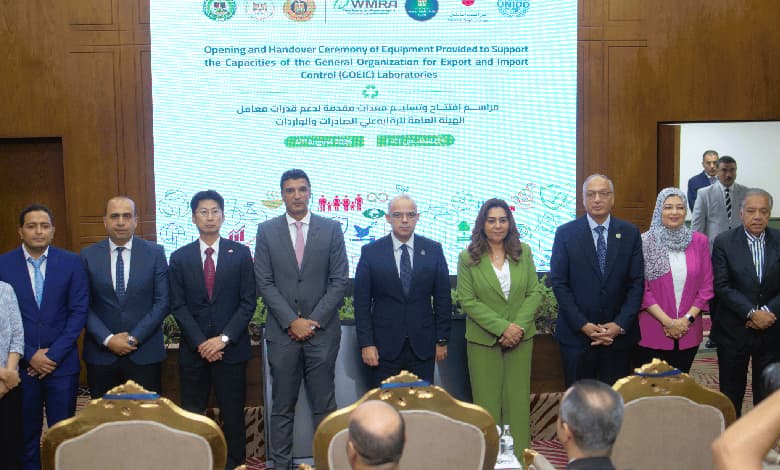
The event took place at GOEIC’s laboratories at Cairo International Airport under the project ‘Supporting the Promotion of Circular Economy Practices on the Single-Use Plastic Value Chain in Egypt’. The initiative supports Egypt’s transition towards more sustainable production and consumption patterns by combining policy and institutional support, awareness raising, technical assistance to enterprises, and the promotion of circular economy practices across the plastics value chain.
The ceremony brought together Manal Awad, Minister of Local Development and Environment; Khaled Hashem, Minister of Industry; and Mohamed Farid Saleh, Minister of Investment and Foreign Trade. The Government of Japan was represented by Yasuhiro Tsukamoto, Minister and Deputy Chief of Mission at the Embassy of Japan in Egypt, while UNIDO was represented by Gihan Attia, Deputy UNIDO Representative in Egypt. The ceremony was hosted by GOEIC Chairman Essam El-Naggar, with the participation of the Waste Management Regulatory Authority and other national partners and development stakeholders.
The new equipment represents an important step in translating Egypt’s policy and technical requirements for sustainable alternatives into effective testing and conformity-assessment capacity. It will enable GOEIC laboratories to carry out technical tests on plastic materials, single-use plastic products and their alternatives, and assess their conformity with applicable Egyptian standards.
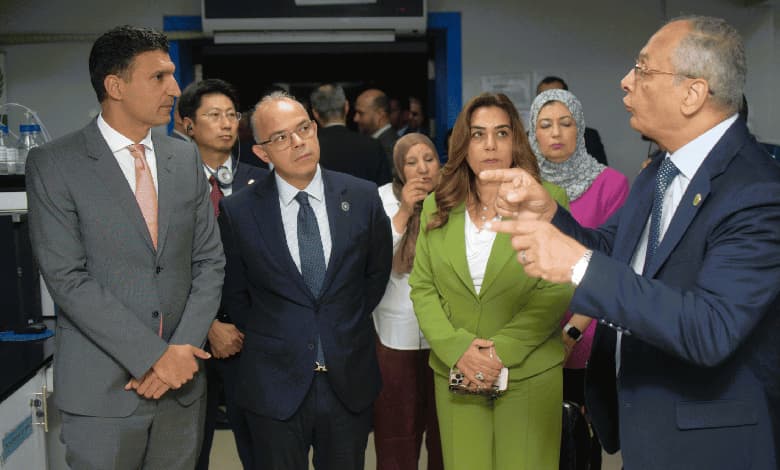
GOEIC Chairman El-Naggar highlighted the practical value of the new capacity: “The new equipment represents a significant addition to GOEIC’s laboratory system, helping improve the efficiency and accuracy of inspection, testing, and conformity-assessment services and enabling us to provide more advanced technical services to producers, exporters, and importers.”
GOEIC also highlighted that developing its laboratory capacities can reduce testing times, improve the quality of services provided to businesses, and help companies verify product conformity before export, thereby supporting confidence in Egyptian products in international markets.
For Egypt, the investment also supports a wider national effort to address plastic pollution while creating the technical and institutional conditions necessary for more sustainable industrial production.
Local Development and Environment Minister Awad, says, “This step reflects a successful model of partnership between the Government of Egypt, UNIDO, and the Government of Japan, based on a shared vision that environmental protection and sustainable industrial development are complementary goals.”
The project also strengthens the link between Egypt’s quality infrastructure and industrial competitiveness. Industry Minister Hashem stressed that enhanced testing and conformity-assessment capabilities can help Egyptian manufacturers meet technical requirements in global markets and expand the production of environmentally sustainable alternatives.
Investment and Foreign Trade Minister Saleh, likewise, highlighted laboratory development as a key pillar of Egypt’s foreign-trade system, noting that more efficient inspection, testing, and conformity assessment contribute to product quality, market compliance, and the ability of Egyptian companies to expand internationally.
The initiative forms part of a longstanding partnership between Egypt, Japan, and UNIDO on circular economy approaches to plastics. The project was launched following cooperation linked to the G20 Osaka Summit 2019 and Japan’s broader efforts under the Osaka Blue Ocean Vision to address marine plastic pollution. UNIDO and Japan formally announced the Egypt initiative in 2021, with a focus on promoting greener production and consumption patterns, supporting SMEs and strengthening the enabling policy environment.
Speaking at the handover, Minister and Deputy Chief of Mission at the Embassy of Japan in Egypt Tsukamoto emphasised that government action alone would not be sufficient: “The transition to a circular economy requires not only government leadership, but also the active participation of the private sector and manufacturers.”
Deputy UNIDO Representative in Egypt Attia says, “Developing quality infrastructure and technical capacities is essential to supporting Egypt’s transition towards a circular economy. Equipping national laboratories with specialised capabilities is an important part of strengthening cooperation between government, industry, and development partners.”
Through these complementary interventions, the project seeks not only to strengthen the technical capacity to assess sustainable alternatives, but also to help create the institutional and industrial conditions needed for circular economy practices to be adopted and sustained.
By strengthening the link between standards, testing capacity, and industrial application, the new laboratory capabilities provide another practical building block for Egypt’s transition towards more resource-efficient production, competitive industry, and a circular economy.