Digital printing is no longer the future of packaging—it is the present rapidly gaining ground. With a global market value projected to soar from $22 billion in 2025 to $36.9 billion by 2030, digital printing for packaging is transforming the industry with its agility, sustainability, and ability to cater to changing consumer and brand demands. Yet, despite this growth, digital print still represents only 4.1% of the total printed packaging market value in 2025, indicating substantial room for expansion.
A Dynamic and Disruptive Shift
Once dominated by analog giants like flexo and offset, the packaging sector is now embracing digital, particularly in label printing. Inkjet and toner-based digital presses have become staples in label conversion, producing over 100 billion A4 label prints in 2025 alone. This segment now holds 23.3% of the total label print market by value—a striking achievement for digital.
But labels are just the beginning.
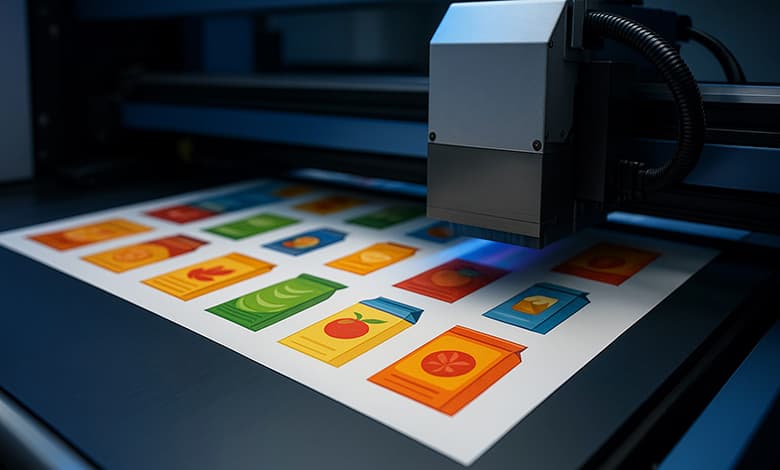
As brands pursue greater customization, faster time-to-market, and shorter print runs, digital is making inroads into corrugated, folding cartons, flexible, and rigid plastic packaging. Inkjet, in particular, is proving to be a scalable and versatile solution for these segments. And with machine learning and generative AI enhancing predictive maintenance, color matching, and workflow automation, digital printing is evolving into a fully connected, data-driven manufacturing process.
Key Drivers: Customization, Speed, and Sustainability
Smithers identifies several forces driving this digital acceleration:
Short Runs, Big Impact: Brands are increasingly producing shorter, targeted runs for regional launches, seasonal promotions, or influencer-led marketing—an area where digital excels.
Sustainability Goals: Digital printing reduces waste, eliminates the need for printing plates, and enables on-demand production, all of which help brands meet environmental targets.
Brand Fragmentation: With the rise of artisan and niche brands, digital offers smaller players access to high-quality packaging with minimal capital investment.
Barriers: Finishing, Workflow, and Brand Hesitation
Despite these strengths, significant challenges still hinder full-scale digital adoption:
Finishing Bottlenecks: In high-throughput packaging applications, such as cartons or corrugated, the finishing process hasn’t caught up with digital’s speed. A digital press may produce 20 short runs per hour, but finishing lines often require multiple die setups—nullifying digital’s quick-turn potential.
Workflow Integration: Many converters struggle to integrate digital presses into existing analog-based workflows. While narrow-web label systems adapted easily, wider web and sheetfed digital systems need finishing and automation upgrades to maximize ROI.
Color Matching & Brand Confidence: Brand managers remain cautious about switching to digital if color fidelity can’t be guaranteed. Hybrid inkjet-flexo presses and color management tools are improving this, but trust takes time.
Food Safety Regulations: With over 70% of printed packaging used in food and beverage, digital inks face regulatory scrutiny. Inkjet, especially UV-curable systems, must prove safety and compatibility with food-grade coatings and recyclability standards.
The Rise of Hybrid and AI-Enhanced Printing
Technology is meeting these challenges head-on. Hybrid presses, combining inkjet with flexo units, allow brands to reproduce metallics and precise spot colors. Meanwhile, AI is being embedded in workflows—from predictive maintenance to dynamic job scheduling—streamlining production and reducing downtime.
Workflow innovations, such as cloud-based job management and inline quality inspection systems, further enhance the efficiency and reliability of digital presses. And digital finishing systems are gradually catching up, offering laser die-cutting, foil stamping, and coating inline or near-line.
Regional Growth and Global Momentum
Asia, particularly China and India, is leading the charge in digital packaging adoption, followed by North America and Western Europe. This global shift is also supported by the growing installed base: over 8,100 narrow-web digital presses are in operation worldwide in 2025, with nearly 1,150 new units expected to be sold that year alone.
Looking Ahead: Digital’s Packaging Decade
By 2030, digital printing will claim 5.8% of the packaging market by value, thanks to its ability to blend personalization with industrial scalability. The lines between analog and digital will blur, with many converters using both in tandem. The emphasis will shift from “digital vs. analog” to “right process for the right job.”
To thrive in this new era, converters must rethink their business models, invest in finishing automation, train their teams for digital-first workflows, and help brands see beyond the press—toward an agile, sustainable, data-driven future.
The digital printing revolution in packaging is well underway, but its full potential remains untapped. As barriers continue to fall—thanks to advancements in inkjet, hybrid systems, AI, and finishing—digital will not just complement analog, but increasingly redefine what’s possible in packaging. For converters and brands willing to innovate, the digital decade has just begun.