After spending a decade in the industrial sector in the southern Turkish city of Gaziantep, Muhammad Shawaf returned to his hometown of Aleppo in northern Syria, carrying with him the expertise in industrial production to revive a profession inherited by his family.
Shawaf comes from a family that has been working in the bag-manufacturing industry for generations. Since the 1990s, the family witnessed the sector’s transition from producing bags made of burlap fabrics to plastic-based products.
As the war in Syria intensified, the Shawaf family sought refuge in Turkey in 2016. During his time there, he continued to work in industrial production in Gaziantep in partnership with Turkish investors, gaining invaluable experience in modern production technologies.
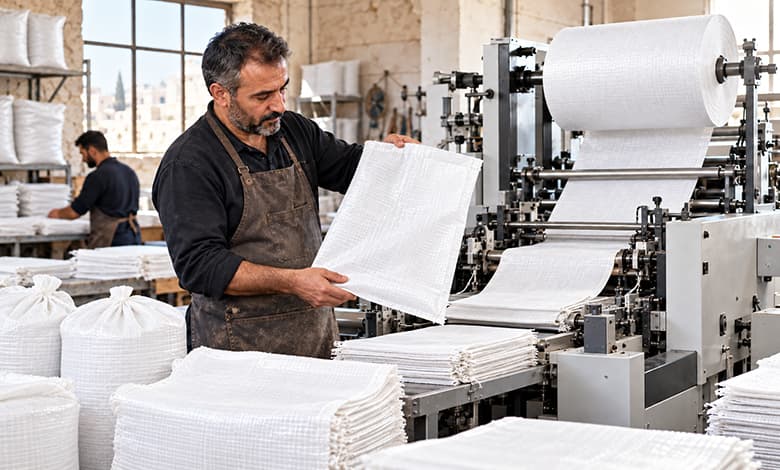
After the fall of the Assad regime, Shawaf decided to return to Aleppo, bringing his expertise and a large part of the industrial equipment to establish a bag manufacturing factory. He highlighted that Turkey’s advanced industrial environment significantly enhanced his professional capabilities, allowing him to acquire cutting-edge skills that he is now applying to his new venture.
Innovative, Cost-Effective Packaging Solutions from Turkey
The new factory produces bags made from polypropylene (PP), a highly versatile thermoplastic widely used in packaging, agriculture, and trade due to its durability and cost-effectiveness. These bags serve as an efficient alternative to traditional paper or plastic packaging.
The weight of the material used in the producing PP bags plays a very important role. Shawaf noted that manufacturing techniques allow producers in Turkey to reduce material weight and cut production costs by up to 20% without compromising on the bag’s strength, durability, or load-bearing capacity. This advanced industrial know-how represents a major step forward for the local market.
Because calculating the precise weight of materials is crucial for cost-efficiency, he explained that by adopting refined Turkish methods, the factory can offer lightweight yet durable packaging solutions tailored to the needs of modern trade.
Electricity Infrastructure Remains Biggest Production Challenge
Severe shortage of electricity is currently the largest obstacle facing the industrial renaissance in Aleppo. Shawaf stressed that reviving the manufacturing sector requires urgent rehabilitation of the infrastructure, calling on relevant authorities to provide consistent power support to factories.
For Muhammad Shawaf, restarting the industrial operation in Aleppo is more than just a business venture; it is a return to a long-standing family legacy, now upgraded with modern technologies and strategies acquired during his years in Turkey.
Source: Anadolu Ajansı