The printing world converged for a defining moment of industry transformation as the Print4All conference unfolded its action-packed agenda. The three-day conference is one of the most important events in the roadmap to Print4All 2027.
The inaugural day (1 July) kicked off with an exclusive B2B networking session designed to connect international buyers, technology suppliers, and industry stakeholders. Around 60 international delegates from 30 countries participated in the event.
The initial gathering allowed professionals to share market data, explore cross application trends, and negotiate collaborative strategies to navigate the rising costs of raw materials and automation. Participants used the platform to build resilient supply chains, establish international distribution partnerships, and preview innovations that will shape the global packaging and print market.
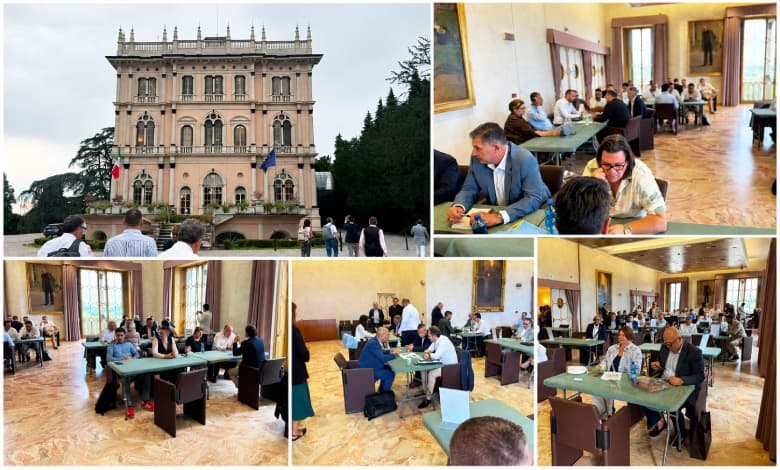
The day’s agenda (4 pm to 7 pm) was followed by an evening networking party that offered the delegates a relaxed environment to solidify the connections made earlier in the day and foster ongoing cultural and industrial exchange.
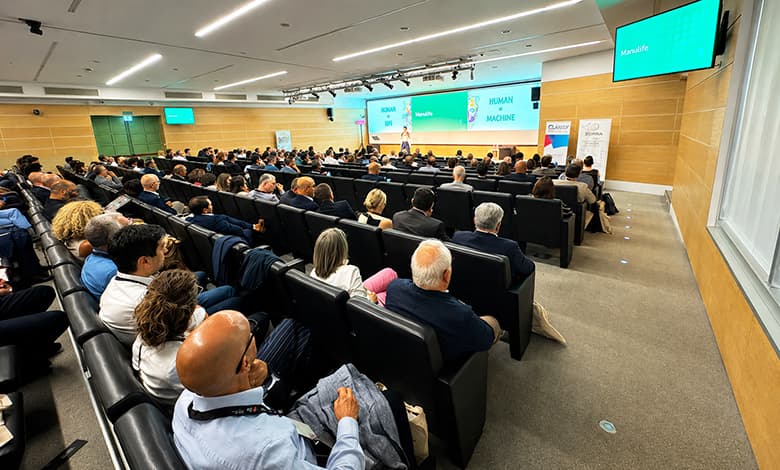
On day two (2 July), the main conference programme was held to a packed audience. Panels focused heavily on the growing role of automation and eco-friendly practices in reshaping trade standards.
Industry leaders from both legacy firms and startups emphasised that while digital transformation is essential to stay competitive, companies must not lose focus on core manufacturing efficiencies.
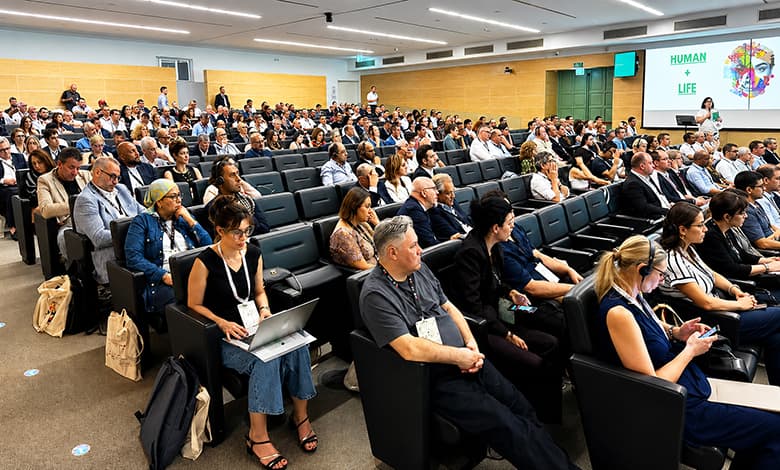
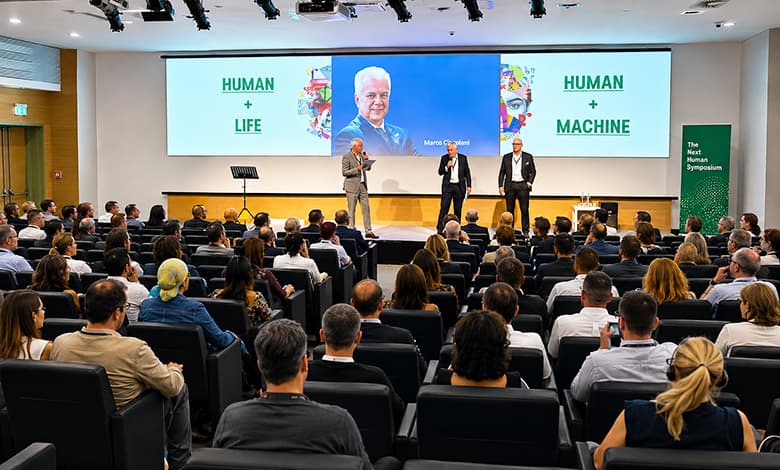
The day kicked off with an optimistic welcome speech outlining the collaborative spirit of the Print4All project. Enrico Barboglio, General Secretary of ARGI and General Director of ACiMGA, alongside ACiMGA President Marco Calcagni, ARGI President Marco Marangoni, and Print4All Exhibition Director Paola Sarco, framed the 2026 event iteration as a celebration of printing and converting tools that turn raw colours, textures, and technologies into a universal language bridging traditional craftsmanship and everyday modern lifestyle.
Artificial intelligence (AI) emerged as the primary talking point during the initial keynotes. Digital media strategist Mafe de Baggis delivered a riveting presentation titled ‘HUMAN+MACHINE – AI Is a Raw Material’, challenging the audience to move beyond baseline platforms like ChatGPT, Gemini, and Claude. de Baggis noted that while standard corporate environments treat AI as a reactive switch for standard templates, true competitive advantage belongs to firms that integrate these platforms natively into their proprietary corporate culture, language, and workflows.
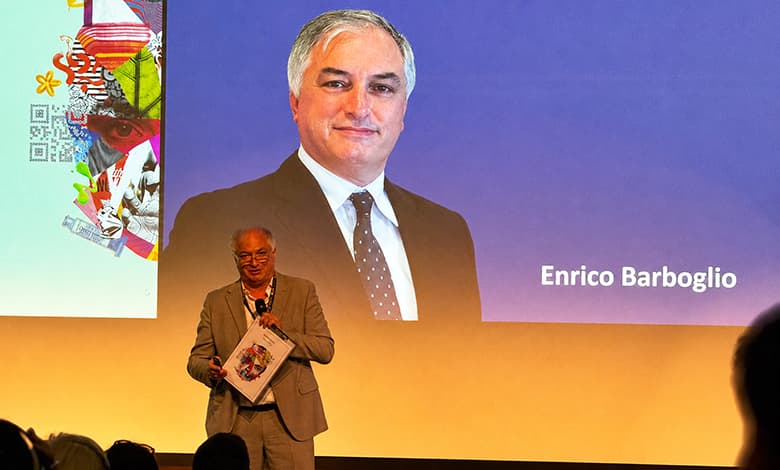
The conference spotlighted 20 years of digitalisation, headlined by a company pitch from HEIDELBERG CEO Marco Marangoni. Following the pitch, the event transitioned into parallel open labs sessions sponsored by key industry players, providing specialised corporate insights into commercial execution. Christian Moretti of Neos Group led an entry on AI adoption in the printing and converting industry, mapping out structural shifts from initial curiosity to genuine competitive advantages. Simultaneously, Stefan K. Mueller from Koenig & Bauer addressed management and production bottlenecks affecting print shops, offering concrete workflows for operational stability.
Canon EMEA’s Paolo Organo discussed the evolving role of inkjet technology in shifting business models from efficiency to total transformation.
Production efficiency remains a critical priority for equipment manufacturers. Fulvio Petratto, Research and Development Director at Petratto, addressed the challenge of managing production bottlenecks within highly automated manufacturing environments. Petratto emphasised that optimising the human-machine relationship is vital to maximising throughput. His analysis specifically focused on integrating new hardware innovations and human-machine interaction models to eliminate mechanical delays within folder-gluer production lines.
The midday programme highlighted how localised mechanical systems integrate with expansive cloud networks. BOBST representatives delivered an analytical review of digital and sustainable packaging ecosystems, focusing on maximising plant efficiency. This was followed by a technical breakdown of high performing, robust, and sustainable ink options for flexographic applications, presented by Massimo Mancini of Flint Group. Rounding out this segment, Gallus Group’s Claudio Torrini took to the podium to outline strategic value creation through advanced digital connectivity, illustrating how cloud infrastructure can drive continuous uptime for contemporary labels and packaging lines.
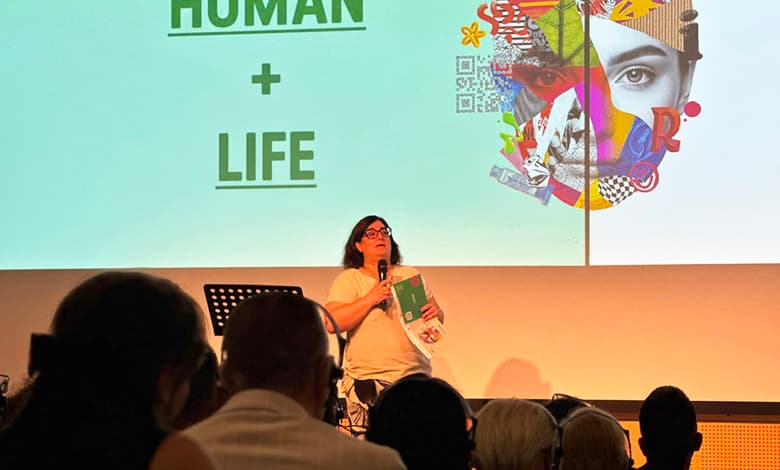
Following a networking lunch, the conference dived into elite segments, highlighting automation, materials science, and macro-economics. Antonella Manenti, Co-Founder and Art Director of HENRY & CO, delivered a keynote address focusing on the evolution of contemporary packaging. Manenti highlighted that packaging design is shifting towards simpler, more intuitive user experiences driven by inclusive design, empathy, and new linguistic trends. She noted that the goal is to make modern packaging universally accessible.
A localised Italian session, presented by Paolo Degano of Morgana Systems, highlighted digital efficiency markers in label printing, alongside a look at sustainable digital converting for premium card stocks by Prati’s Ricardo Giancola.
Bringing the afternoon session to a global scale, Dr. Nicolas Alvarez, an independent analyst in political strategy and geopolitics, delivered a concluding macro-analysis mapping on how shifting international boundaries, emerging trade zones, and evolving regional demographics are reshaping the future supply chains of the global print infrastructure.
This human-centric approach to data was echoed later in the afternoon by Amy Servi Bonner, whose keynote ‘HUMAN+MACHINE – Who Decides? The Operational Discipline of Human+Machine in Print Operations’ addresses the heavy operational decisions, approval workflows, and division of labour required when automated assets step onto the factory floor. Bonner introduced a structured four-pillar operational framework designed to manage AI-augmented systems.
A joint market benchmark report presented by Nathan Safran of Research Alliance and Stefano Portolani of Centro Studi Printing highlighted the competitive advantages driving AI adoption. Their research contrasted the implementation strategies and operational maturity levels currently observed between the Italian and US printing markets.
Physical innovation matched the digital buzz, anchoring the conversation around rigorous compliance and manufacturing hurdles. TCE Printing’s Richard Warnick took the stage for a company pitch titled ‘Sustainability Has to Be Sustainable’. Warnick confronted the practical obstacles of working with water-based inks, recycled materials, and compostable substrates. His presentation illustrated the complex path of stabilising turbulent drying configurations, adjusting ink viscosity, and managing surface energy down to a predictable science to prove that eco-conscious operations can scale profitably.
Environmental, Social, and Governance (ESG) criteria are becoming deeply embedded into manufacturing business models. Uteco’s Lorenzo Faedo outlined how the equipment manufacturer integrates ESG standards into its core growth strategy.
The seminar concluded with a comprehensive look at the human element and supply chain logistics within the industry. GWP Italia President Martina Corradi and PRINTlovers Editor-in-Chief Michela Pibiri presented the first Italian research study dedicated to inclusion, employment trends, and workplace culture in printing and converting. Their analysis tracked labour market dynamics, industry talent acquisition, and emerging skills development programmes. This tied directly into the broader industry framework focused on creating a shared economic and environmental value chain for sustainable packaging across the entire global supply chain.
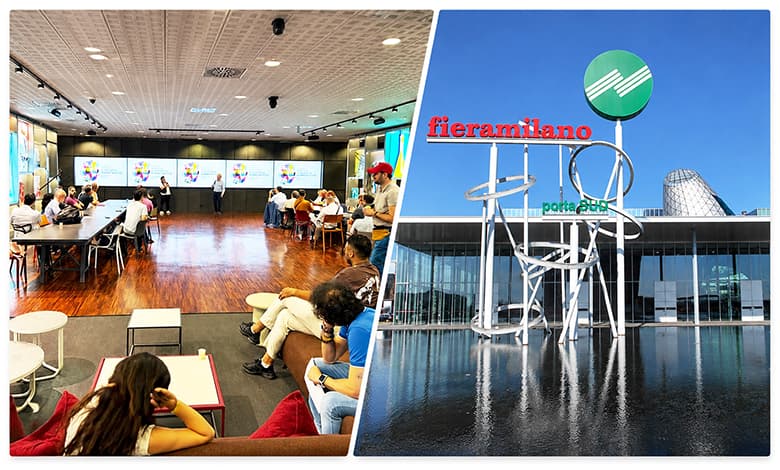
The final day of the event (3 July) concluded with a visit to Fiera Milano. Delegates spent the day navigating the sprawling, architecturally distinct venue, which boasts over 20 massive pavilions equipped with world-class facilities. Alongside touring the modern infrastructure, attendees received a briefing on the venue’s history. Looking ahead, this landmark location will officially serve as the host venue for the eagerly awaited Print4All 2027, positioning it once again at the centre of global industry innovation.