With the FIFA World Cup 2026 just round the corner, a sea of football aficionados are getting ready to throng the stadiums—some legendary and others ultra-modern—to witness the blue riband event of global sports.
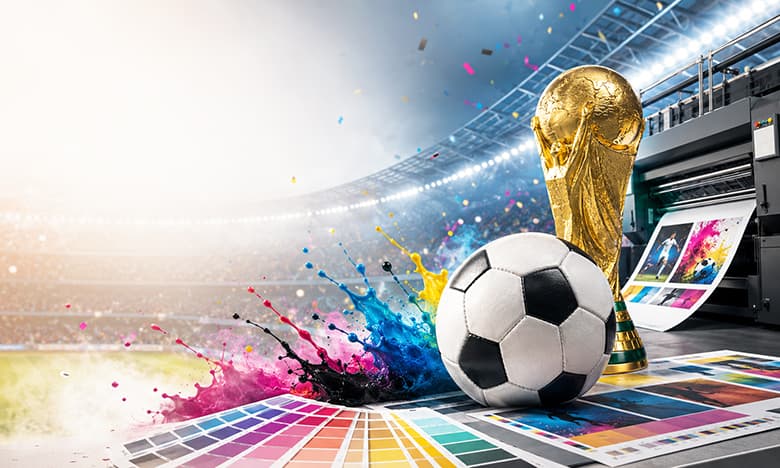
However, the quadrennial soccer championship is more than just a mega sporting event. It is one of the largest global stages for communication, branding, advertising, packaging, publishing, signage, and print. While billions of eyes focus on the pitch, the world’s most-watched sporting event is quietly driven by a colossal engine of paper, ink, and massive machinery.
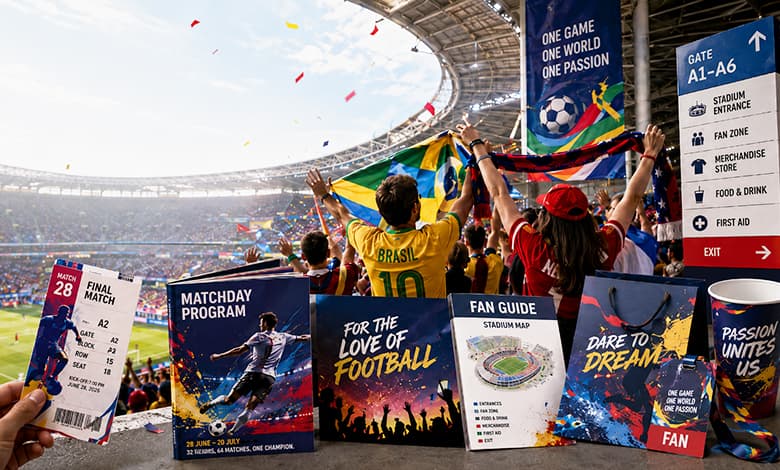
From the moment a country wins the host bid, print architecture brings the tournament to life. Stadiums are wrapped in miles of wide-format vinyl banners, city streets are transformed by towering promotional billboards, and millions of fans handle tangible pieces of history through printed match tickets, official tournament programmes, flags, posters, collectible sticker albums, fan merchandise, packaging, and other promotional materials.
The 23rd FIFA World Cup will be played across 16 cities in Canada, Mexico, and the United States, making it the first edition staged across three host countries. The 2026 edition will be the biggest and most exciting edition of the tournament to date as 48 teams from around the globe compete in 104 fixtures.
For the print industry, this scale creates enormous opportunities. From airports and hotels to stadiums, fan zones, retail stores, restaurants, transport hubs, and media centres, printed communication remains essential to the tournament experience. Even in a digital-first world, print continues to give major sporting events their physical identity. Without print, such major sporting events would not be possible. The behind-the-scenes work to ensure that everything runs smoothly from day one often goes unnoticed, since ultimately the focus is on the games and their results and not organisational mishaps.

Print, Integral Part of World Cup Experience
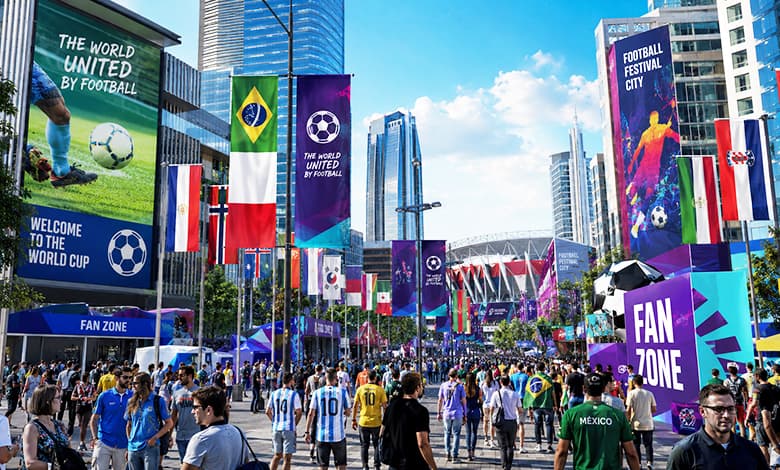
Print has always been an integral part of major international sporting events, such as the FIFA World Cup. Streets of host cities are decorated with flags, building wraps, directional signage, billboards, banners, and branded installations. These are not just decorations; they guide people, create emotions, promote sponsors, and build a sense of celebration. For the FIFA World Cup Qatar 2022, around 9,05,000 square metres of graphics were produced, comprising approximately 21,700 street banners, 87 kilometres of fencing material, and numerous directional signs. Over 1,300 signage structures were erected and more than 300 tonnes of aluminium were processed for hardware.
Large-format printing plays a central role in this environment. Stadium façades, fan-zone graphics, vehicle wraps, and outdoor advertising campaigns require durable, high-quality printed materials that can withstand weather, crowds, and constant visibility. Signage and wayfinding are equally important, helping millions of visitors move safely through airports, metro stations, stadium entrances, hospitality zones, and public viewing areas.
Packaging also benefits from the tournament. Food and beverage brands, souvenir companies, sports retailers, and promotional-product suppliers often launch limited-edition packaging linked to football celebrations. For fans, cups, cartons, labels, bags, sleeves, boxes, and gift packs become part of the larger “fun” experience.
Golden Ticket for PSPs and Converters
The upcoming World Cup is generating an unprecedented surge in demand for the global printing, packaging, and signage industries. Driven by both official sponsors and local businesses—including restaurants, hotels, and retailers—brands are urgently seeking rapid production, premium finishes, and hyper-localised marketing materials to engage consumers during the tournament.
For instance, local sports bars and restaurants routinely print custom, tournament-themed menus and outdoor banners to draw crowds during match broadcasts, proving that the economic impact extends beyond official sponsors. Additionally, hospitality venues like high-end hotels require premium finishing, often ordering custom-embossed match programmes and metallic-foiled VIP packages for corporate guests.
Industry experts highlight digital printing as a critical asset for this event due to its capacity for short production runs and swift design turnarounds. This technology allows a global beverage brand to easily execute localised campaigns by deploying Spanish language packaging in Mexico City while simultaneously launching English-language marketing in Los Angeles or Toronto. Furthermore, the capacity for quick turnaround times enables apparel retailers to use digital printing to instantly produce and ship t-shirts featuring a specific player within 24 hours of a historic game-winning goal. Ultimately, print service providers (PSPs) that can deliver speed, flexibility, and precise colour consistency will be the ones best positioned for success.
End-to-End Event Sustainability
Modern sports events are also judged by their environmental impact, more importantly after their conclusion. This means print buyers are increasingly looking for recyclable substrates, PVC-free media, water-based inks, responsible paper sourcing, reusable display systems, and waste-reduction strategies. Textiles, graphics, and carrier materials are sorted based on what can be reused, recycled, and disposed of. At the 2022 FIFA World Cup, around 90% of the 300 tonnes of aluminium hardware was transferred to a reuse programme, while the remainder was recycled. Over 1,300 signage structures were designed for reuse at future events, requiring only the graphics to be replaced. The fence barriers were made from 100% recycled materials and printed using water-based inks. Even packaging, labels, and fibre materials were returned to defined cycles for collection, processing, and reuse.
The print industry has an opportunity to show that printed communication can be both powerful and responsible. Sustainable materials, efficient production, and smart logistics can help brands reduce waste while still delivering strong visual impact.
Ink and Glory: How Print is Winning in a Digital World
Despite the massive digital onslaught defining modern sporting events, physical print media continues to serve as the structural backbone for the FIFA World Cup experience. While billions of global spectators engage with the tournament through real-time streaming platforms, apps, social media, and online campaigns, industry data confirms that digital communication does not replace tangible media. Instead, print and digital channels operate in tandem to maximise fan engagement. For instance, a fan might first discover a promotional campaign via an Instagram story, but the emotional connection often happens in the physical world, like holding a printed ticket, wearing a branded apparel, taking a photo in front of a stadium banner, or carrying a limited-edition package.
This sensory immersion is what ultimately anchors the tournament in the collective memory of host nations and travelling spectators alike. Print gives the tournament texture, colour, scale, and memory that pixels on a screen simply cannot replicate. For example, massive stadium banners and outdoor billboards transform city streets into celebratory epicentres, while commemorative matchday programmes turn a 90-minute football game into a lifelong souvenir.
Shaping World Cup Cultural Experience through Print
The FIFA World Cup remains one of the strongest examples of how sport, branding, and print come together. As the 2026 edition prepares to welcome more teams, more matches, and more fans than ever before, the demand for high-quality visual communication will be enormous.
For the global print, packaging, signage, and label industries, the World Cup is not only a football event, but a reminder that print continues to play a vital role in how the world celebrates, navigates, remembers, and connects.
As the final whistle blows and digital screens fade, the true legacy of the 2026 World Cup will live on through the physical artifacts left in its wake. Ultimately, this massive sporting event serves as a powerful reminder that the print industry does much more than decorate stadiums. It binds the global community together, converting a transient tournament into an enduring cultural experience.