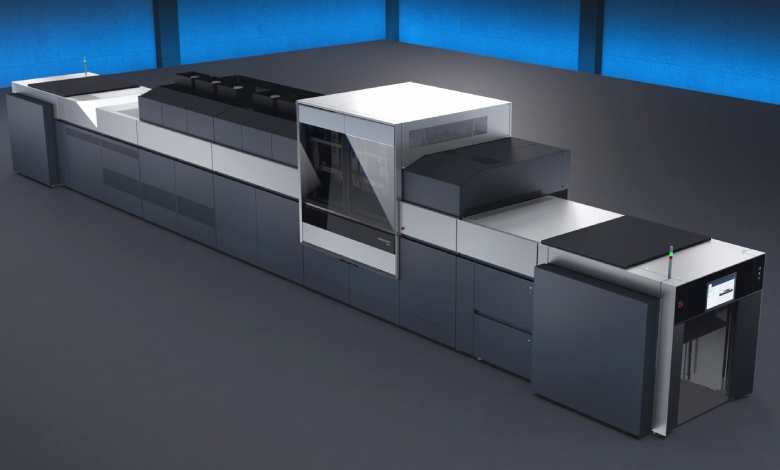
As commercial print markets across the Middle East continue to evolve toward shorter runs, faster turnaround times, and higher job complexity, Heidelberger Druckmaschinen AG has strengthened its digital printing portfolio with the launch of the Jetfire 75, a B2+ sheetfed inkjet press designed for industrial-scale hybrid production.
For print service providers in the region—serving government, corporate, security, education, and marketing sectors—the Jetfire 75 arrives at a time when flexibility, automation, and consistent quality across digital and offset are becoming decisive competitive factors.
Hybrid production answers regional market realities
Across the Middle East, commercial printers are experiencing a familiar shift: while total print volumes remain stable, average run lengths are falling, and the number of individual jobs is rising sharply. At the same time, many print businesses continue to rely on highly productive sheetfed offset presses for longer runs, particularly in government and institutional work.
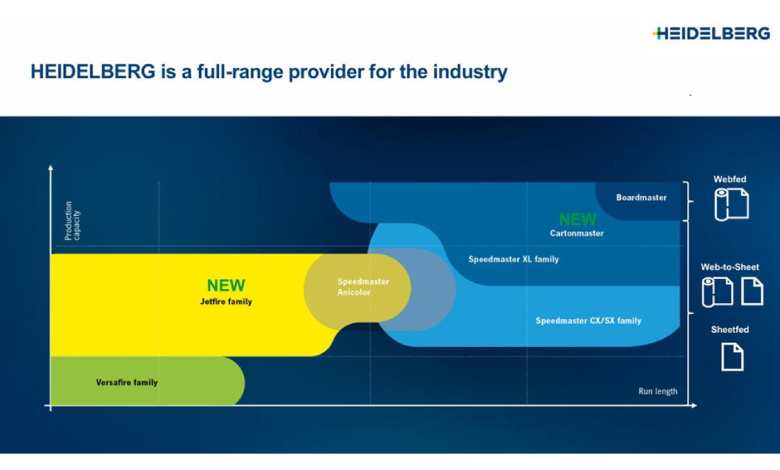
This is precisely the production gap the Jetfire 75 is designed to fill. Positioned between offset and digital, the press enables printers to move seamlessly between technologies, selecting the most cost-effective and time-efficient route for each job.
Industry forecasts indicate that inkjet-based commercial printing will grow by more than 4% annually through 2030, driven largely by markets such as the Middle East, where demand for versioned, multilingual, and time-sensitive print continues to rise.
Fully integrated ecosystem – a key advantage for the region
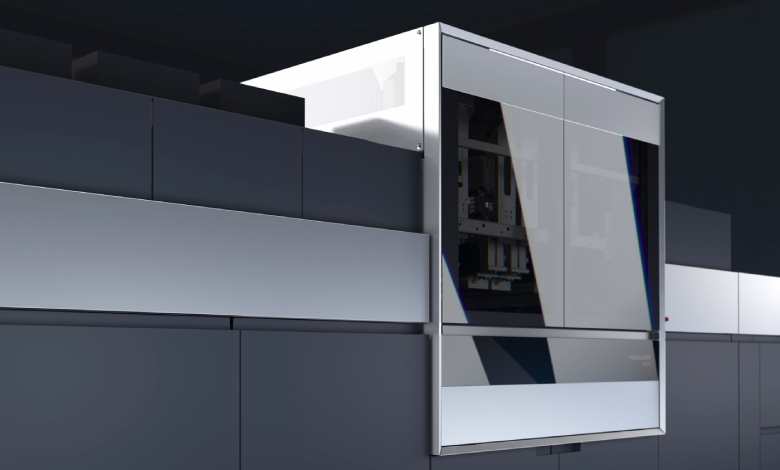
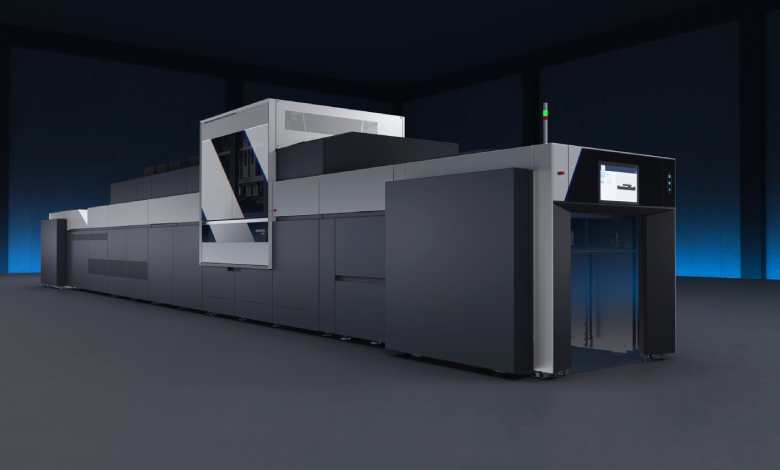
The Jetfire 75 is a B2+ (614 × 750 mm) water-based inkjet press that is fully embedded within HEIDELBERG’s digital ecosystem. This includes Prinect workflows, consumables, service, training, and postpress integration, all managed through the HEIDELBERG Customer Portal.
For Middle East printers, where production environments often include mixed fleets, multiple application types, and high uptime requirements, this system-level integration reduces operational complexity and improves production predictability.
According to HEIDELBERG, the Jetfire 75 delivers a combination of industrial productivity, high image quality, and application flexibility that has historically been difficult to achieve in digital printing at this format size.
AI-driven workflow supports smarter production decisions
At the heart of the Jetfire 75’s value proposition is its integration with Prinect Production and the newly launched Prinect Touch Free workflow. Using AI and real-time production data, the system automatically determines whether a job should be printed digitally or in offset, based on cost, turnaround time, and production efficiency.
This is particularly relevant for Middle East print operations handling government tenders, commercial campaigns, and multilingual content, where frequent job changes and strict deadlines are common.
With fully automated job routing and consistent color management across both technologies, the Jetfire 75 can process more than 1,000 jobs per day in a highly automated environment.
Addressing skills shortages and uptime challenges
Labour availability and skills development remain key challenges across the region’s print industry. HEIDELBERG has addressed this with a “self-service” operating concept, allowing trained operators to perform selected service and maintenance tasks independently.
The company says that only a few days of training are required to operate the Jetfire 75, supported by HEIDELBERG’s regional and global service infrastructure—an important consideration for printers operating in high-pressure production environments.
Jürgen Otto, CEO of HEIDELBERG, notes that the Jetfire 75 reinforces the company’s systems-integrator approach:
“Our goal is to help customers improve profitability and competitiveness by combining equipment, software, service, and automation into a single, coherent production environment.”
Built for diverse Middle East applications
The Jetfire 75 is designed for industrial production across a wide application range, from short-run and personalised work to high-volume commercial printing. Typical applications include brochures, flyers, catalogues, books, magazines, posters, calendars, labels, stickers, and personalised direct mail—along with time-critical print-on-demand jobs.
This flexibility makes the press particularly relevant for government communications, corporate reporting, educational materials, and promotional print, all key growth areas in Middle East markets.
Key technical highlights
- Water-based inkjet technology, 1200 dpi, B2+ format
- Output up to 9,800 4-up sheets/hour (simplex) ≈ 39,000 A4 pages/hour
- Up to 7,200 6-up sheets/hour (simplex) ≈ 43,000 A4 pages/hour
- Annual capacity up to 58 million 4-up sheets (simplex)
- Substrate range: 60–450 gsm, including selected boards
- Fully automated quality control and self-service maintenance
- End-to-end automation via Prinect Production and Prinect Touch Free
Market availability
Orders for the Jetfire 75 are now open. Demonstrations will begin from summer 2026 at HEIDELBERG’s Print Media Center – Home of Print in Wiesloch-Walldorf, with first customer installations scheduled for autumn 2026. Initial rollout will focus on core global markets, with regional availability expected to follow HEIDELBERG’s established deployment strategy.
The Jetfire 75 builds on the successful rollout of the Jetfire 50, first showcased at drupa 2024, and signals HEIDELBERG’s intent to play a central role in the next phase of digital-offset convergence.