A revitalized flexographic printing industry is on track for significant global growth, with new projections from Smithers forecasting a $267.2 billion market by 2029. As print providers navigate increasing digital disruption, flexo remains a resilient and highly adaptable analog technology—especially in packaging applications where it continues to thrive.
The findings come from Smithers’ latest in-depth research report, “The Future of Flexographic Printing Markets to 2029,” which details key market dynamics, innovations, and forecasts for the flexo industry.

Why Flexo Remains Relevant
While digital printing technologies like inkjet and toner are expanding their footprint, analog presses still dominate in terms of global print volume. Flexography (commonly called flexo) stands out as the fastest-growing analog process, largely due to its versatility, cost efficiency in long runs, and strong compatibility with various substrates used in packaging.
In 2024, flexographic printing output reached 8.6 trillion A4 print equivalents (542.4 billion square meters), generating $230.5 billion in revenue and commanding the largest share of global print value (25.7%)—ahead of sheetfed offset (20.2%) and digital printing (18.4%). Smithers projects a 3.0% compound annual growth rate (CAGR) for flexo through 2029, when output is expected to surpass 10 trillion A4 equivalents, reaching a market value of $267.2 billion.


Types of Flexographic Printing
Flexography is not a one-size-fits-all solution. It comprises several variants based on printing configurations and ink systems:
- Central Impression (CI) Press
- Common for: Flexible packaging, plastic films, and paper substrates.
- Features: A single large drum (impression cylinder) holds the substrate while multiple printing units print around it.
- Benefits: Excellent color registration and compact footprint.
- Stack Press
- Common for: Folding cartons, corrugated board, and multi-layered jobs.
- Features: Separate vertical printing stations, each with its own impression cylinder.
- Benefits: Flexibility to print on both sides and handle thicker substrates.

- In-line Flexo Press
- Common for: Label production, folding cartons, and security printing.
- Features: Units arranged in a straight line; often integrated with die-cutting, laminating, and finishing.
- Benefits: High integration potential and modularity.
Key Applications of Flexo Printing
Labels and Tags
Flexo remains dominant in self-adhesive labels, including food, beverage, pharmaceutical, and logistics applications. Hybrid presses combining flexo with inkjet are widely used for variable data printing (e.g., barcodes, batch numbers).
Corrugated Packaging
This is the largest flexo segment, accounting for 64% of flexo revenues in 2024. Flexo is ideal for post-print and pre-print jobs on corrugated board used for e-commerce, food delivery, and industrial shipping.
Flexible Packaging
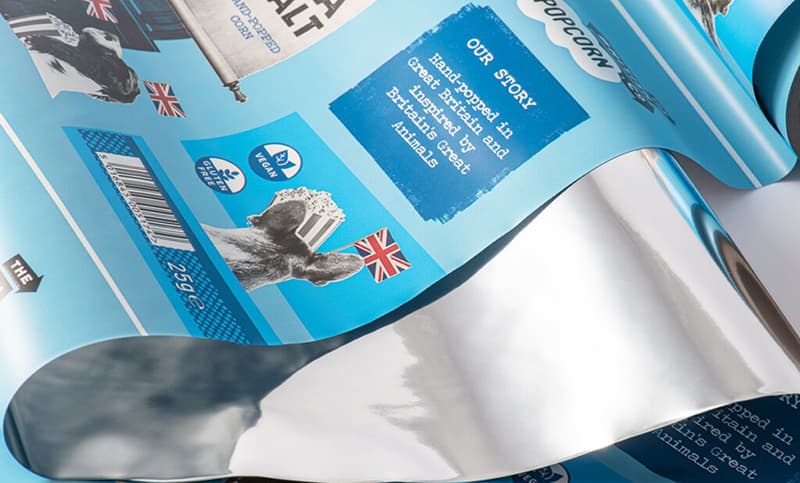
Used in snacks, pouches, and frozen foods, this market continues to grow. Flexo excels with plastic films, foils, and laminates, offering fast turnaround and lower production costs.
Folding Cartons
Applications include cosmetics, pharmaceuticals, and small appliance packaging. Flexo’s ability to print on coated/uncoated boards and integrate cold foiling or embossing enhances its utility.

Bags & Sacks
Although this category is expected to decline due to sustainability trends and regulatory bans, flexo has historically served printed paper/plastic bags for retail and food services.
Hygiene & Nonwoven Products
Printed napkins, tissue rolls, kitchen towels, and even baby wipes packaging continue to rely on flexo, though digital alternatives remain limited.
Digital vs. Flexo: Not a Zero-Sum Game
Although digital presses are increasingly used for short-run, personalized print jobs, flexo still dominates where long-run, high-volume output is required. Many converters now invest in hybrid presses, where inkjet stations are installed on flexo platforms—combining the speed and economy of analog with the flexibility of digital.
Digital penetration remains limited in segments like flexible packaging and corrugated board, where flexo’s cost-efficiency, print durability, and speed are unmatched.
Technology Trends Driving Flexo Forward
Automation & AI Integration
Modern flexo presses feature automated controls for impression pressure, tension, registration, and drying. These functions are increasingly enhanced by AI-powered software, which enables predictive maintenance, real-time job monitoring, and remote diagnostics.
Expanded Color Gamut (ECG) Printing
Advanced flexo systems now use 7-color process sets (CMYK + OGV) to simulate 90%+ of Pantone colors. This approach reduces changeover time and ink waste while improving consistency.
Improved Prepress & Plate Making
Innovations such as single-step plate making and solvent-free plate processing have cut down production time, costs, and environmental impact. Companies like Asahi Photoproducts lead with solutions like AWP CleanFlatMedium, enabling precise ink transfer on recyclable substrates.
Environmental Sustainability
Flexo is evolving to meet increasing demand for eco-friendly printing. This includes:
- Reduced use of solvents and VOCs
- Adoption of water-based and UV-curable inks
- Printing on recycled and compostable substrates
- Lower energy consumption through efficient drying systems
Final Outlook
The global flexographic printing industry is undergoing a quiet transformation. Far from being eclipsed by digital, it is adapting, innovating, and growing—particularly in the packaging sector. With increasing automation, sustainable advancements, and hybrid capabilities, flexo is well-positioned to dominate analog print for the rest of the decade and beyond.
The full analysis—including data breakdowns, trends, and regional insights—is available in the Smithers report “The Future of Flexographic Printing Markets to 2029.”