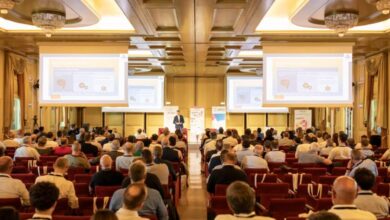
Why Trade Shows Still Shape the Future of Print in the Middle East
For the Middle East’s printing and packaging industry, trade shows have never been just calendar events. They are decision points. Places where technology is tested, partnerships are forged, and major investments begin—not online, not over email, but face-to-face.
After several years of uncertainty, exhibitions across the region and globally have returned with renewed purpose. What has changed is not their relevance, but their intensity. Today’s show floors are leaner, more focused, and filled with visitors who arrive ready to evaluate, negotiate, and commit.
In an industry built on tangible proof—ink on substrate, speed on press, workflow under load—trade shows remain unmatched. And in the Middle East, where relationships, trust, and long-term partnerships are central to business culture, their role is more critical than ever.
A Regional Market That Demands Physical Proof
The Middle East print market is investment-driven. Whether it is commercial printing, packaging, labels, textiles, or wide format, buyers here make capital decisions that often define their business direction for years.
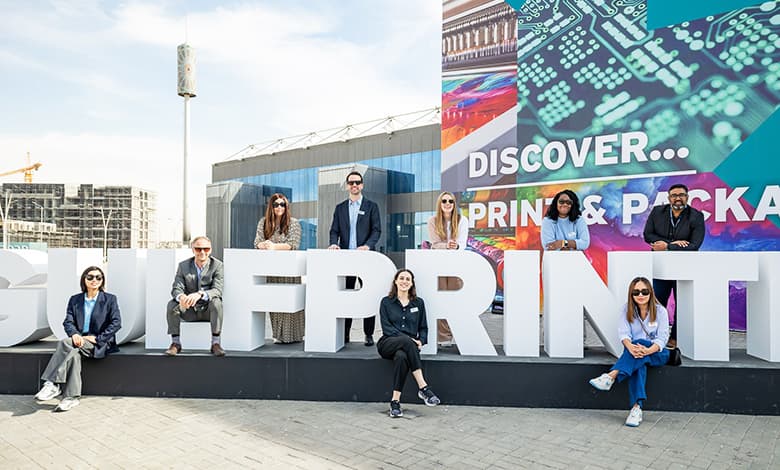
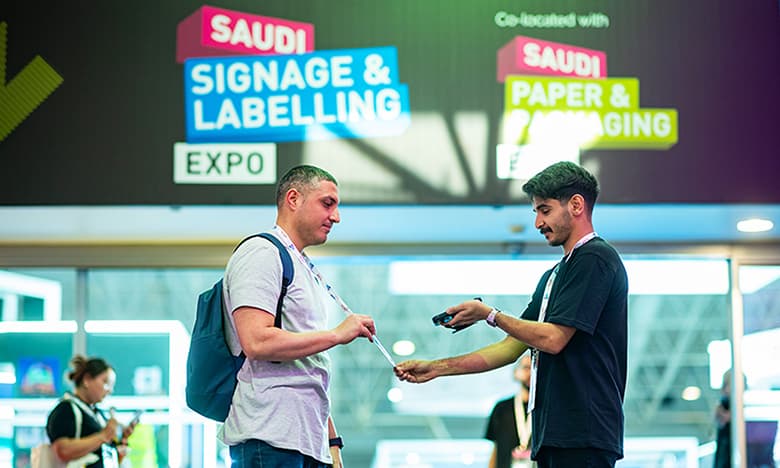
This is why exhibitions such as Gulf Print & Pack, FESPA Middle East, Saudi Signage and Labelling Expo, Saudi Print & Pack & SGI Dubai play a role that digital marketing simply cannot replace.
Printers want to:
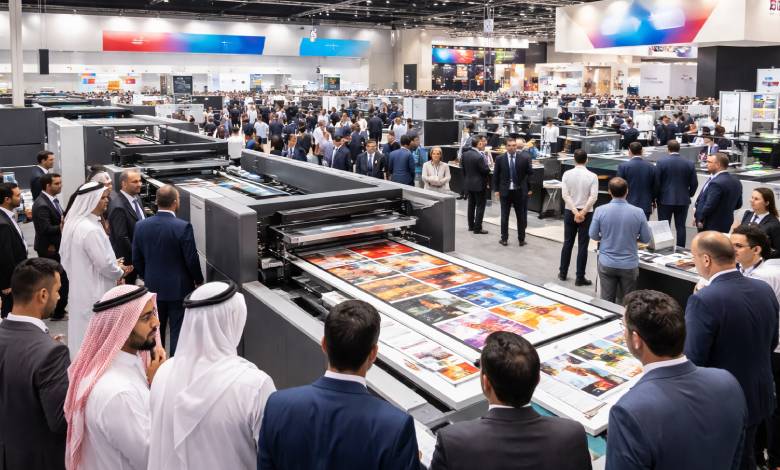
- See machines running, not rendered
- Hold samples, not PDFs
- Speak directly with engineers, not sales scripts
- Understand service, training, and regional support—not just specifications
A live press demonstration, a real substrate test, or a workflow walkthrough often answers questions that months of online research cannot.
Fewer Visitors, Stronger Intent
Across global and regional exhibitions, organizers and exhibitors are reporting the same shift:
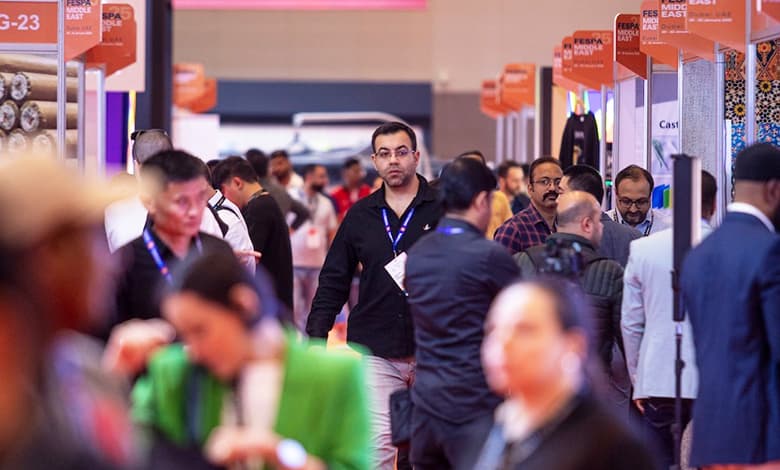
attendance numbers may be slightly lower than pre-2020 peaks, but visitor quality is significantly higher.
Middle East exhibitors consistently note that:
- Visitors arrive with defined requirements and budgets
- Decision-makers attend in person, not just technical staff
- Conversations move faster from evaluation to quotation
This trend aligns with global data, but it resonates particularly well in this region, where shows have always been closely tied to purchasing cycles. A visit to a stand is no longer exploratory—it is often the final validation step before an order.
Global Shows, Local Consequences
International exhibitions continue to influence purchasing behavior in the Middle East.
At drupa, Middle Eastern delegations arrive in force, often with structured agendas covering digital presses, hybrid production, automation, and sustainability. Deals initiated in Düsseldorf frequently materialize months later in Dubai, Riyadh, Cairo, or Tehran.
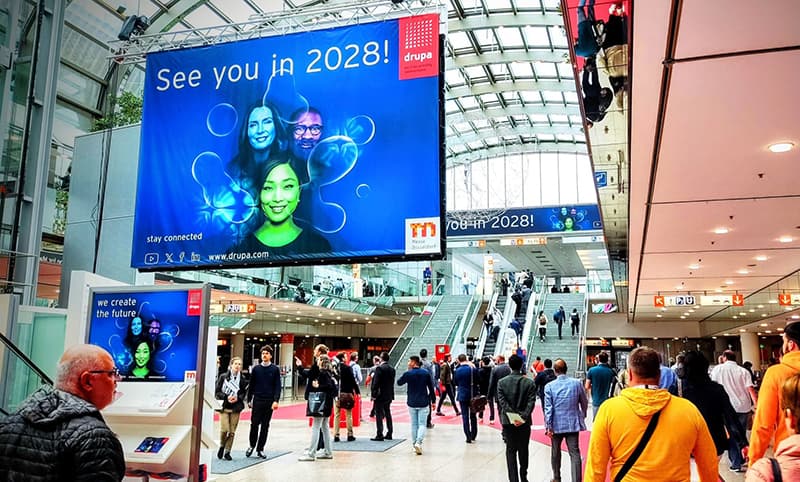

Similarly, FESPA Global Print Expo and PRINTING United Expo continue to shape technology roadmaps for regional converters and print service providers.
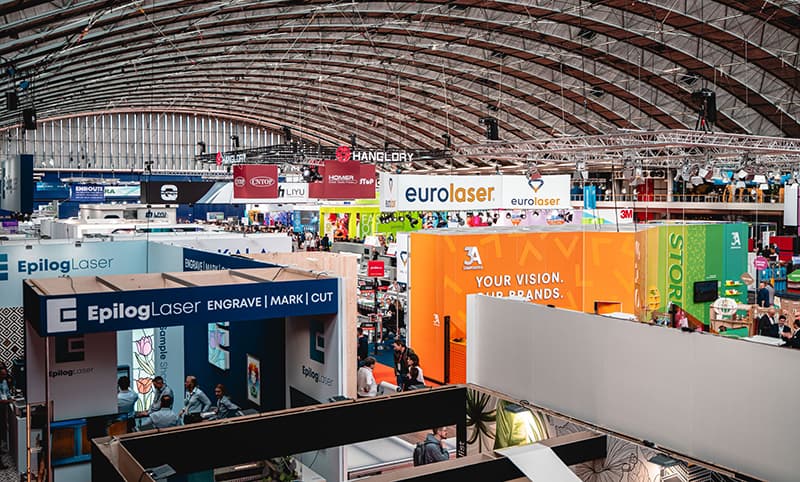
But increasingly, regional exhibitions are no longer “smaller versions” of global shows. They are becoming decision hubs in their own right, tailored to local substrates, climate conditions, regulatory frameworks, and market realities.
From Visibility to Measurable Business
For exhibitors targeting the Middle East, presence alone is no longer enough.
Successful vendors now treat exhibitions as compressed sales cycles, not branding exercises. That means:
- Pre-booking meetings with qualified prospects
- Customizing demonstrations to regional applications
- Training booth staff to capture context, not just contact details
A printer visiting a stand is not asking “What does this machine do?”
They are asking:
- Can this run our substrates reliably in our environment?
- What does uptime look like in this region?
- Who supports us after installation—and how fast?
Exhibitors who answer these questions clearly and honestly are the ones who leave shows with real pipelines, not just leads.
The Buyer’s Advantage: How Printers Should Approach Shows Today
For printers and converters, trade shows remain one of the most efficient learning environments available—if approached strategically.
The most effective visitors:
- Define priorities before arriving
- Focus on specific production challenges
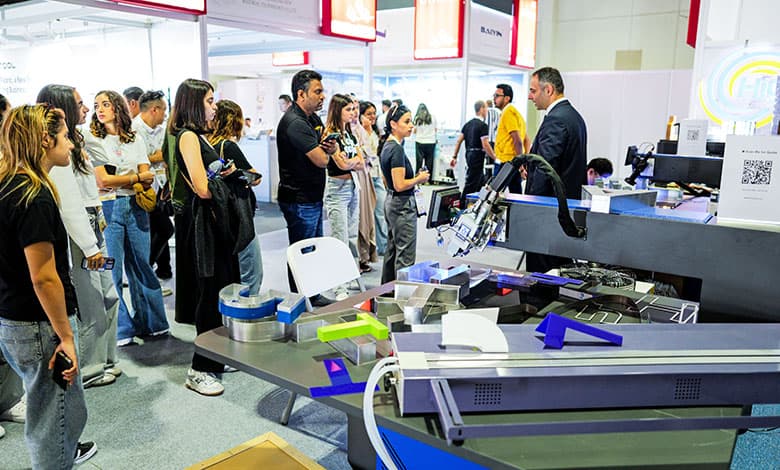
- Ask vendors to run realistic jobs, not ideal demos
- Collect samples for in-house testing, not just brochures
Equally important is post-show discipline. Companies that review findings quickly, involve technical and financial teams, and follow up while conversations are fresh consistently gain more value from their exhibition investments.
In the Middle East, where time-to-decision can be fast once confidence is established, this follow-through often determines who secures early-mover advantage.
A New Generation on the Show Floor
Another visible change across exhibitions is generational.
Younger professionals—many educated internationally and digitally fluent—are stepping into decision-making roles across the region. They expect:
- Transparency around sustainability and energy use
- Clear ROI narratives, not just performance claims
- Interactive, honest demonstrations
Exhibitors who engage this audience with openness and substance build credibility that extends far beyond the show itself.
Why Trade Shows Still Matter—Especially Here
In a region where business is built on trust, reputation, and long-term relationships, trade shows provide something no virtual channel can replicate: confidence through direct experience.
They compress months of evaluation into days.
They turn comparisons into clarity.
They transform conversations into commitments.
For the Middle East print industry—diverse, fast-evolving, and investment-driven—exhibitions remain one of the most powerful engines of growth.

Looking Ahead
With a strong pipeline of regional and global events, the opportunity is clear.
Exhibitors who approach shows with strategy, preparation, and regional sensitivity will continue to win market share. Printers who treat exhibitions as strategic tools rather than routine visits will make better, faster, and more confident investment decisions.
Trade shows are not relics of a pre-digital era.
In the Middle East print market, they remain where decisions are proven, not promised.
And in an industry where seeing—and touching—still matters, the show floor continues to be where the future of print takes shape.